Can you pop a stye?
Short answer? Nope.
We get it. Every time you look in the mirror, you see that angry little bump. It looks like a pimple, bringing an important question to mind: Can you pop a stye?
As satisfying as that might be, it's not a good idea. Popping, poking, or squeezing can irritate your eye, turning a minor issue into a major inconvenience. Messing with a stye also spreads bacteria.
The good news? Styes often drain on their own. Let's take a look at why popping a stye is a no-no, what you should do instead, and when it's time to have an eye doctor join the party.
What a stye is and why it looks poppable
A stye is an inflamed bump on the eyelid. It usually develops due to a blocked or infected oil gland.
Styes closely resemble zits, which explains why so many people wonder if you can pop a stye on your eyelid.
Unfortunately, this close resemblance is a bit misleading. Unlike the pimple that showed up the night before your senior prom, a stye forms on the delicate tissue of the eyelid, so it requires a gentler approach.
A stye can cause:
-
A tender bump
-
Swelling
-
Redness
-
Discomfort while blinking
-
Irritation
-
Watering
-
Yellow or white spot (if it's ready to drain on its own)
Did you notice we said drain on its own? That means no popping! Just because something looks poppable doesn't mean you should mess with it.
Why you shouldn't pop a stye
Although it might feel satisfying, popping a stye can push bacteria deeper into the eyelid, increasing swelling and slowing down the healing process.
We know it's tempting, especially if the stye has a white or yellow tip, but don't give in.
Repeat after us:
Can you pop a stye on your eyelid? No!
Should you pop a stye if it has a yellow tip? No!
Should you pop a stye with a white tip? No!
A stye isn't like the occasional pimples that pop up on your forehead or chin. Each eyelid contains oil glands that help your tears work properly. Squeezing a stye can irritate the eyelid and spread bacteria where you definitely don't want any.
Just because a stye has a visible head doesn't mean it's ready to be drained. It simply means your body is working to heal the bump naturally.
To recap: Can you pop a stye when it comes to a head? No!
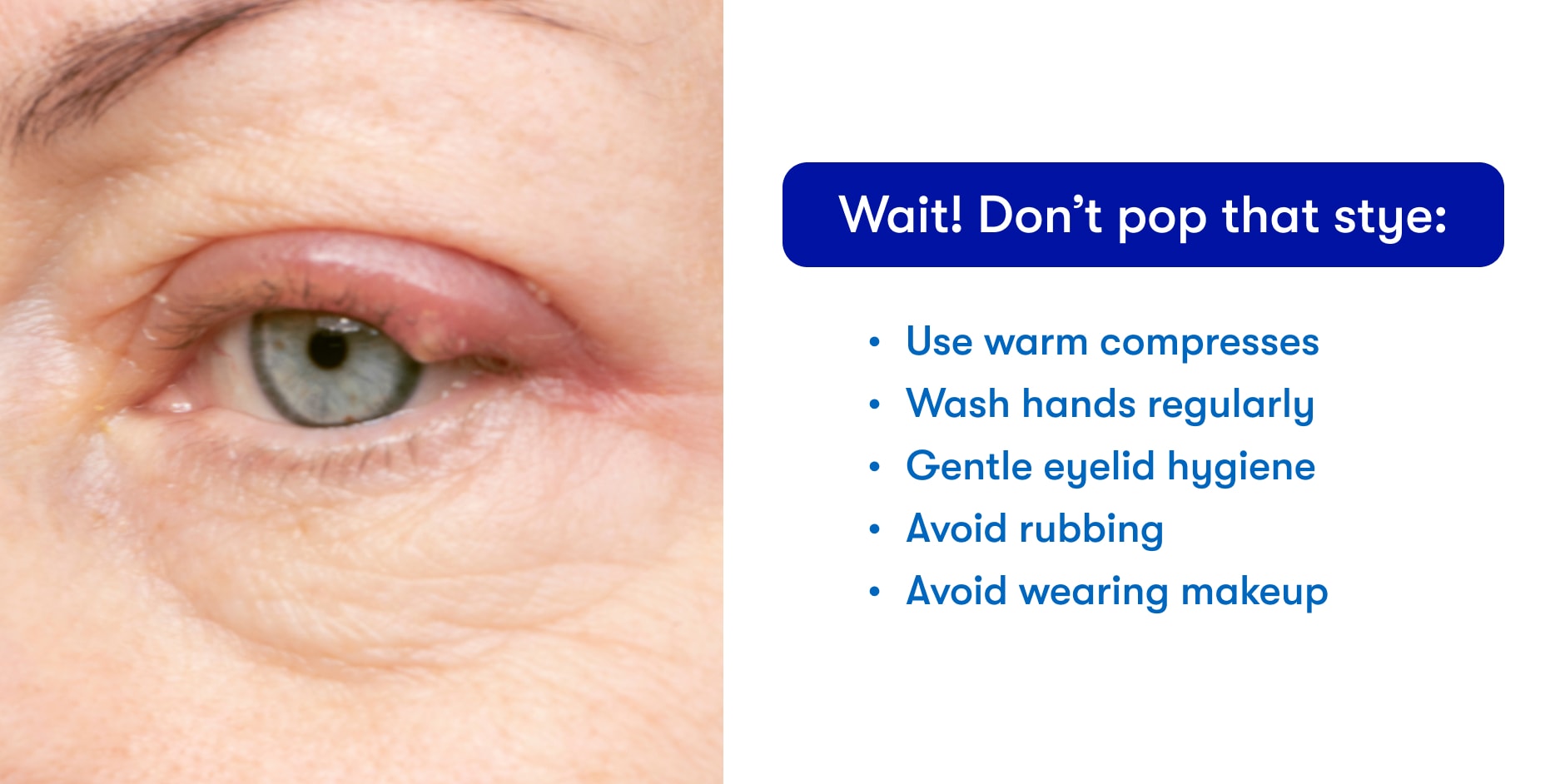
Can you pop a stye with a needle?
Definitely not. Using a needle or another sharp object sounds reasonable until you remember that a stye sits just a few millimeters away from your eye. Searching "can you pop a stye with a needle," "how to pop a stye," and "popping eye stye" can bring up all sorts of DIY advice, but just because it's on the internet doesn't mean it's safe.
A needle can injure your eyelid, introduce more bacteria, or make that little bump even angrier. None of these outcomes are ideal. If your stye needs to be drained, a doctor can determine the best way to do it.
What to do instead of popping a stye
Instead of trying to pop a stye, focus on gentle measures designed to promote healing. Think self-care, not "Let's see what happens when I poke my eyelid with a needle."
One of the easiest ways to ease discomfort is to place a warm compress over your closed eyelid. Not only does it feel good but the warmth can help soften up blocked oils.
While your eyelid heals, you should also:
-
Keep the area as clean as possible.
-
Wash your hands before touching your face.
-
Avoid wearing eye makeup.
-
Refrain from squeezing or rubbing the stye.
-
Take a break from false eyelashes.
There's no magic potion to make a stye disappear immediately. In most cases, these little bumps need time to heal.
What happens if a stye pops on its own?
If your stye drains naturally, that's fine, as long as you don't try to help it along. Keep the area clean, minimize eye irritation, and don't squeeze anything.
Sometimes you'll notice a little drainage after applying a warm compress. That's different from puncturing the stye or squeezing it with your fingers.
The best thing to do is clean away the drainage with a tissue or fresh washcloth. Avoid rubbing your eye or using eye makeup until the area heals completely.
Will a stye pop on its own?
Some styes may drain on their own, but you shouldn't try to force the process.
-
Will a stye pop?
-
Do styes pop on their own?
-
Will a stye pop on its own?
No matter how you word your question, the answer is the same: Maybe. Some styes shrink until you can barely see them, while others drain naturally after a few days of self-care measures. Both are completely normal.
Warm compresses may speed things along by softening the oil in a blocked gland, but that's different from squeezing or puncturing the bump yourself.
Can you wear contacts with a stye?
It's best to give your contacts a break while you have an active, painful, or draining stye. That may not be the answer you wanted, but contacts can irritate the eyelid or trap bacteria or discharge near the eye.
If you need more information on wearing contacts with a stye, get professional guidance from your eye doctor.
When to see an eye doctor for a stye
See an eye doctor if the stye gets worse, affects your vision, spreads, keeps coming back, or doesn't improve with gentle care.
It's especially important to seek professional care if you notice any of the following:
-
Severe pain
-
Worsening swelling or redness
-
Vision changes
-
Discharge
-
Fever or other signs of infection
-
Recurring signs
-
Symptoms that don't improve
Find an eye doctor near you who can help with styes and related issues.
How to help prevent styes
You can reduce your risk of future styes by keeping your eyelids, hands, makeup tools, and contact lenses clean.
This involves:
-
Washing your hands regularly, especially before touching your face
-
Removing eye makeup before bed
-
Replacing outdated eye makeup
-
Not sharing eye products with other people
-
Following your contact lens manufacturer's hygiene instructions
Discuss recurring styes with an eye care professional before you request a contact lens prescription.
Don't pop a stye — treat it gently
The safest way to handle a stye is to let it heal on its own. Instead of popping, squeezing, poking, or puncturing the bump, apply warm compresses, avoid wearing contacts, and get professional care if your symptoms worsen.
Before you order contact lenses online, check with an eye doctor to determine if your symptoms are normal or require additional care.
Original publish date: 2/8/2024
Updated date: 7/27/2026