Trying to decide between contacts and glasses? You’re not alone.
Maybe you’re tired of your glasses fogging up every time you walk into a warm building. Maybe you’re curious about contacts but aren’t thrilled about putting something in your eye every day. Or maybe you’re wondering if you really have to choose one over the other.
Here’s the short answer: neither is universally better.
Contact lenses and glasses both have advantages, disadvantages, and situations where they shine. In fact, many people find that using both gives them the flexibility to handle everything from work and workouts to travel and lazy weekends at home.
Let’s take a look at how contacts and glasses compare and when each option makes the most sense.
Understanding contact lenses
Contact lenses sit directly on the surface of your eye to correct vision. They’re available in a variety of designs, including daily disposable, biweekly, monthly, toric, multifocal, and specialty lenses.
Contacts can correct many common vision problems, including:
Because contacts move with your eyes, they provide a natural field of view and don’t have frames blocking your peripheral vision.
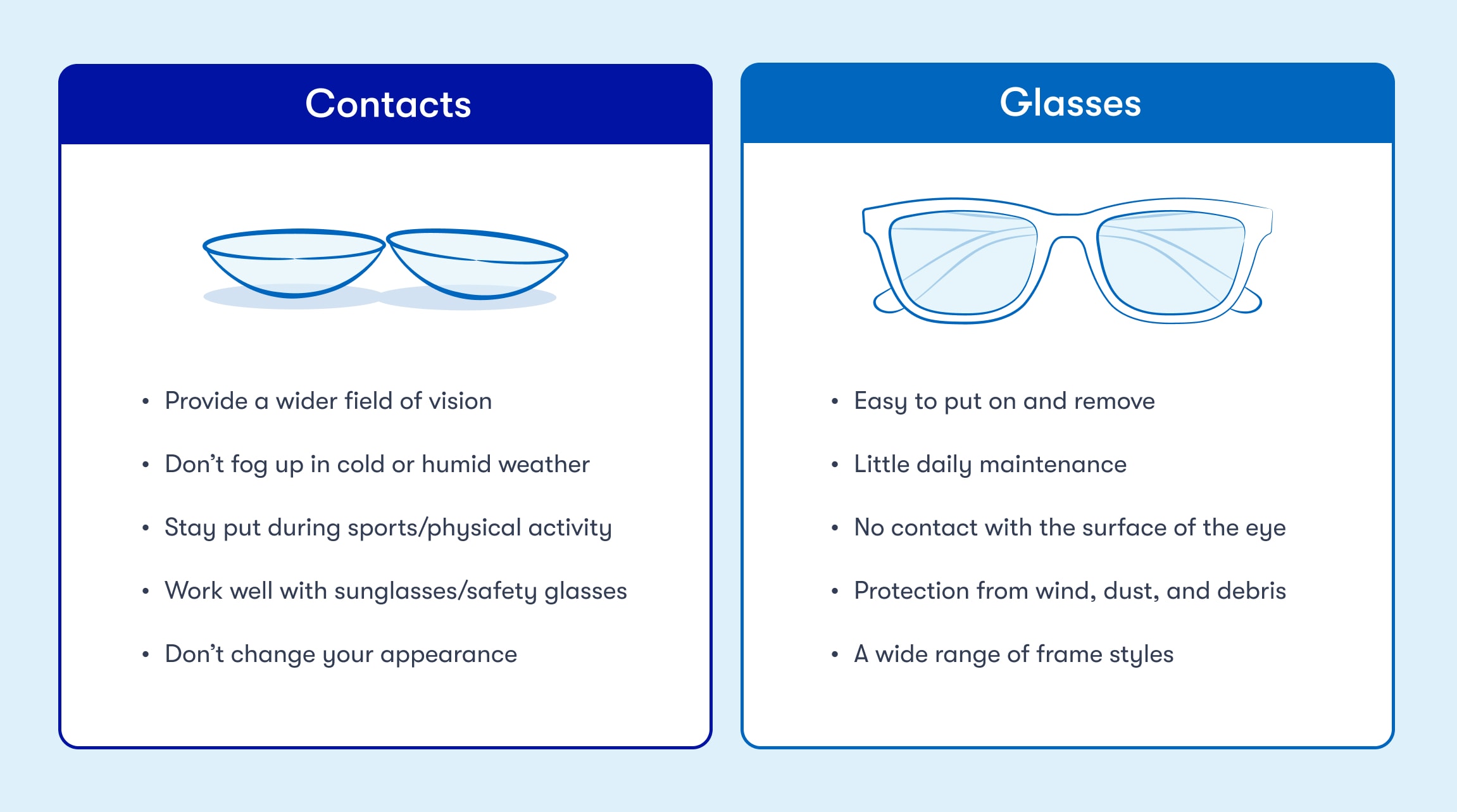
Advantages of contact lenses
Many people prefer contacts because they:
Provide a wider field of vision
Don’t fog up in cold or humid weather
Stay in place during sports and physical activity
Work well with sunglasses and protective eyewear
Don’t change your appearance
For active lifestyles, contacts can be incredibly convenient. Whether you’re running a race, hiking a trail, or trying to see a fly ball in the outfield, you don’t have to worry about frames slipping down your nose.
Disadvantages of contact lenses
Contacts require more commitment than glasses.
Potential drawbacks include:
Daily handling and maintenance
Higher risk of eye infections if worn or cleaned improperly
Dryness or irritation for some wearers
Ongoing replacement costs
The need for regular contact lens prescriptions
Some people also discover they’re simply not comfortable wearing contacts. Conditions such as dry eye syndrome, severe allergies, or certain corneal conditions can make contact lens wear more challenging.
Can you take a 20-minute nap with contacts in?
It happens. You sit down on the couch, close your eyes for “just a few minutes,” and wake up an hour later.
An occasional brief nap is unlikely to cause serious problems for most contact lens wearers, but eye doctors generally recommend removing contacts before sleeping whenever possible. Sleeping in contacts reduces oxygen flow to the cornea and can increase the risk of irritation, dryness, and infection.
If you accidentally nap in your contacts, remove them if your eyes feel dry or uncomfortable and consider switching to glasses for the rest of the day.
The role of glasses in vision correction
Glasses correct vision externally by placing lenses in front of your eyes. Unlike contacts, they never touch the eye’s surface.
Many people appreciate glasses because they’re simple, low-maintenance, and easy to wear.
Advantages of glasses
Glasses offer several benefits:
Easy to put on and remove
Little daily maintenance
No contact with the surface of the eye
Protection from wind, dust, and debris
A wide range of frame styles
For people with dry eyes or those who spend long hours in front of screens, glasses can often feel more comfortable than contact lenses.
Disadvantages of glasses
Glasses aren’t perfect either.
Potential downsides include:
Limited peripheral vision
Fogging in certain weather conditions
Rain spots and smudges
Frames sliding during physical activity
Pressure on the nose or ears
People with stronger prescriptions may also notice edge distortion, where objects near the sides of the lens appear slightly stretched or distorted.
Do contacts make your eyesight better?
Contacts and glasses both correct vision, but they don’t permanently improve eyesight.
Their job is to help you see clearly while you’re wearing them.
Because contact lenses sit directly on the eye, some people feel that vision appears more natural compared to glasses, especially when it comes to peripheral vision. However, contacts don’t cure nearsightedness, farsightedness, astigmatism, or other refractive errors.
Vision quality: contacts vs. glasses
Many people notice subtle differences between contact lenses and glasses.
Contacts:
Move with your eyes
Provide a wider field of view
Eliminate frame obstruction
May feel more natural for high prescriptions
Glasses:
Never touch the eye
Can provide excellent visual sharpness
Are easier to adjust throughout the day
May be better for people who experience contact lens discomfort
For people with strong prescriptions, contacts can sometimes provide a more natural image size than glasses because they sit directly on the eye rather than in front of it.
Cost and insurance considerations
When comparing contact lenses vs. glasses, cost is often part of the decision.
Over time, contact lenses may cost more because they need to be replaced regularly.
Insurance plans vary widely. Some vision plans provide an allowance for glasses, while others allow you to apply benefits toward contact lenses. In many cases, you’ll need to decide which option provides the most value based on your coverage.
Can I use my contact lens prescription for glasses?
Contact lens prescriptions include measurements such as:
Base curve
Diameter
Lens brand
Because contacts sit directly on the eye and glasses sit several millimeters away from it, the prescriptions are calculated differently. You’ll need a separate glasses prescription if you plan to wear glasses.
What might disqualify you from contacts?
Many people can wear contacts successfully, but some situations may require special consideration.
Your eye doctor may recommend limiting or avoiding contacts if you have:
That doesn’t automatically mean contacts are off the table. Specialty lenses and newer materials may still be an option, depending on your situation.
When to choose contacts
Contacts may be a great fit if you:
Play sports regularly
Want unobstructed peripheral vision
Prefer not to wear frames
Have a strong glasses prescription
Frequently wear sunglasses
Why contacts are popular with college students
For many college students, contacts fit naturally into a busy schedule. Between rushing across campus, heading to the gym, cramming for exams, and showing up for game day photos, glasses aren’t always the most convenient option.
Contacts offer a few advantages that make student life easier:
No fogging when walking between cold classrooms and warm buildings
No glasses sliding down your nose during workouts, intramural sports, or fitness classes
Full peripheral vision for sports, running, cycling, and other activities
Freedom to wear sunglasses without dealing with prescription lenses
A clear, unobstructed look for photos, interviews, and presentations
They’re also easy to incorporate into life on campus. Whether you’re studying late in the library, heading to a football game, meeting friends for coffee, or navigating a packed class schedule, contacts move with you rather than becoming one more thing to manage throughout the day.
Of course, contacts aren’t an all-or-nothing decision. Many students prefer wearing contacts during the day and switching to glasses when they’re back at the dorm or spending long hours in front of a laptop.
When to choose glasses
Glasses may be the better choice if you:
Have dry or sensitive eyes
Want a lower-maintenance option
Spend long hours at a computer
Prefer not to handle contact lenses
Need a backup vision correction option
Why using both often works best
Here’s the thing: you don’t have to pick sides.
Many people wear contacts during the day, for workouts, travel, or special occasions and switch to glasses at night or when their eyes need a break.
Having both gives you flexibility, comfort, and backup options if one isn’t practical in a given situation.
Think of glasses and contacts less as competitors and more as teammates.
Whether you wear contacts, glasses, or both, we’ve got you covered
Whether you’re looking to order contacts from 1-800 Contacts, shop for glasses at The Framery, or build a vision routine that includes both, we’ve made it easy to get what you need without the hassle.
And if you’re a college student, there’s even better news. Through our student discount program, eligible students can save on contacts. Confirm your student status with 1-800 Contacts in just a few quick steps with our online verification tool.
Original publish date: 6/17/2024
Updated date: 8/13/2026
Your happiness, backed by our Gajillion Percent Promise.