


Eye irritation after wearing contacts: dryness, or something else?
Most of the time, eye irritation after taking out your contacts comes down to dryness. Your eyes may feel scratchy, tired, or uncomfortable after a long day of contact lens wear.
Sometimes, though, irritation can signal something more serious, such as contact lens overwear or an eye infection called keratitis.
The key is knowing when your symptoms are likely to improve with rest and artificial tears and when it’s time to call an eye doctor.
Why do my eyes hurt after I take out my contacts?
Several common issues can cause discomfort after removing contact lenses.
Dryness
Contact lenses can reduce the amount of moisture and oxygen reaching the surface of the eye throughout the day.
As a result, for a short period after removal, your eyes may feel:
-
Dry
-
Scratchy
-
Tired
-
Slightly irritated
Allergies or debris
Dust, pollen, makeup, pet hair, or other debris can collect on a lens and continue irritating your eye even after the lens comes out.
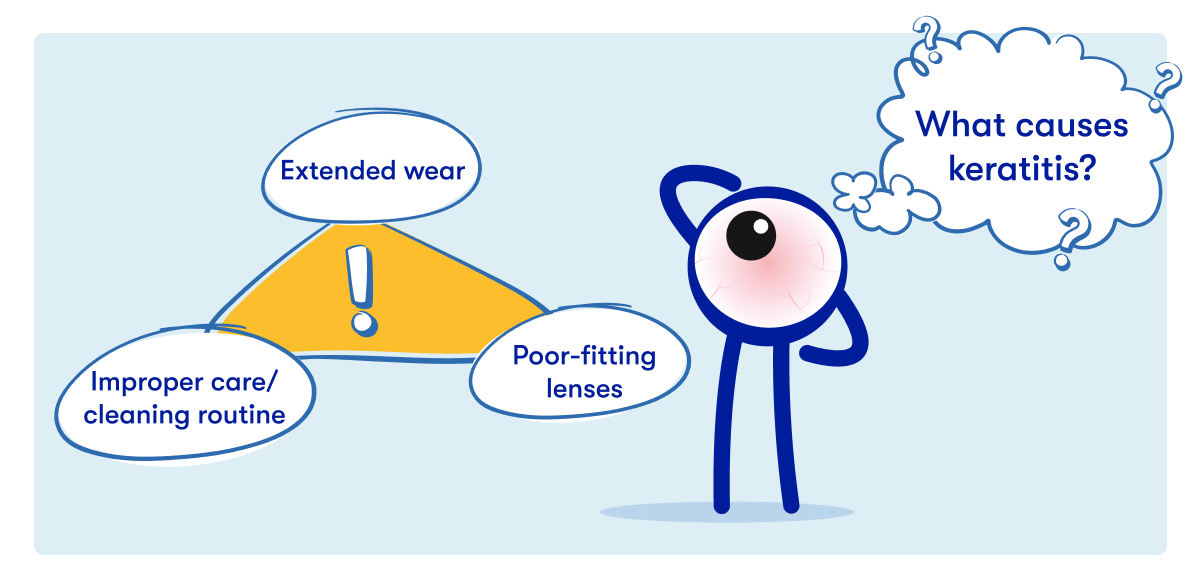
Contact lens overwear
Wearing contacts longer than recommended can cause the cornea to become irritated, resulting in:
-
Redness
-
Dryness
-
Eye fatigue
-
A gritty sensation
Improper lens fit
A contact lens that doesn’t fit properly can create friction against the eye and cause ongoing irritation.
Lens hygiene issues
Skipping cleaning steps, topping off old solution, or using an old lens case can increase the risk of irritation and infection.
Tiny scratches on the cornea
A damaged lens or minor corneal injury can sometimes cause pain that’s more noticeable once the lens has been removed.
Possible infection
Pain that persists, especially when accompanied by redness, discharge, blurred vision, or light sensitivity, may indicate something more serious than simple dryness.
Mild irritation often improves with blinking, artificial tears, and a break from contact lenses. Symptoms that continue or worsen deserve medical attention.
Why does it feel like there’s still something in my eye?
Many contact lens wearers have had the experience of removing a lens and immediately wondering whether it’s actually gone.
A persistent foreign-body sensation can happen for several reasons.
Reduced oxygen to the cornea
Contact lens overwear can limit oxygen reaching the cornea, making the eye more sensitive and irritated.
Minor corneal irritation
A small scratch or irritated area on the cornea can create the feeling that something is stuck in the eye even when nothing is there.
Deposits and buildup
Protein deposits or debris on a contact lens may continue irritating the eye after the lens is removed.
Early signs of infection
Some infections, including keratitis, can cause a persistent gritty or foreign-body sensation.
If the feeling improves after blinking or using artificial tears, mild irritation is more likely. If it persists alongside pain or redness, an eye exam is a good idea.
What happens if you wear contacts for more than 12 hours?
Not necessarily much. It depends on your eyes and your specific contact lenses.
There isn’t a universal “safe” number of hours that applies to everyone.
The more important question is whether you’re exceeding the wear schedule recommended by your eye doctor.
When contacts stay in too long, they can reduce:
-
Oxygen reaching the cornea
-
Tear exchange beneath the lens
-
Overall comfort
This can increase the risk of:
-
Dryness
-
Redness
-
Eye strain
-
Corneal irritation
-
Infection
If your eyes consistently feel uncomfortable before the end of the day, that’s a sign they may need a break.
What actually counts as wearing contacts too long?
“Too long” isn’t just about hours.
It includes going beyond any of the guidelines for your specific lenses, including:
-
Daily wear time
-
Overnight wear instructions
-
Replacement schedules
-
Cleaning and storage recommendations
For example, a lens designed to be replaced monthly shouldn’t be stretched to two months simply because it still feels comfortable.
What are the symptoms of contact lens overwear?
Common symptoms of contact lens overwear include:
-
Redness
-
Significant dryness
-
A gritty or scratchy feeling
-
Eye pain
-
Light sensitivity
-
Pain when blinking
-
Persistent discomfort after removing lenses
Many people describe it as feeling like something is trapped under the eyelid.
While mild dryness and irritation may improve after removing your lenses, pain, blurred vision, light sensitivity, or increasing redness should not be assumed to be normal contact lens overwear.
Contact lens irritation vs. possible keratitis
More likely to be mild irritation
-
Mild dryness
-
Mild redness
-
Temporary discomfort
-
Symptoms that improve after removing contacts
-
Relief with artificial tears
More likely to need prompt medical attention
-
Eye pain
-
Light sensitivity
-
Blurred vision
-
Eye discharge
-
Persistent redness
-
Symptoms that continue or worsen after contacts are removed
If you’re unsure which category you fall into, it’s safer to contact an eye doctor.
Remove your contacts and seek care if you notice:
-
Eye pain instead of mild discomfort
-
Increasing redness
-
Light sensitivity
-
Blurred or reduced vision
-
Eye discharge
-
A white spot on the cornea
-
A foreign-body sensation that won’t go away
-
Symptoms that continue after the lenses are removed
These symptoms are not typical end-of-day contact lens dryness and may indicate a corneal injury or infection.
How long does contact lens overwear last?
Mild dryness and irritation often begin improving after removing your lenses and giving your eyes a chance to recover.
However, pain, redness, light sensitivity, blurred vision, discharge, or a persistent feeling that something is in your eye should not be considered normal contact lens overwear symptoms. If those symptoms are present, contact an eye doctor rather than waiting to see if they improve on their own.
The safest approach is to stop wearing your contacts until you understand what’s causing the symptoms.
What is keratitis?
Keratitis is an inflammation of the cornea, the clear front surface of the eye.
Keratitis can be infectious caused by:
-
Bacteria
-
Viruses
-
Fungi
-
Parasites
Noninfectious caused by:
-
Injury
-
UV exposure
-
Dryness
-
Corneal irritation
-
Certain inflammatory conditions
Only an eye doctor can determine which type is present.
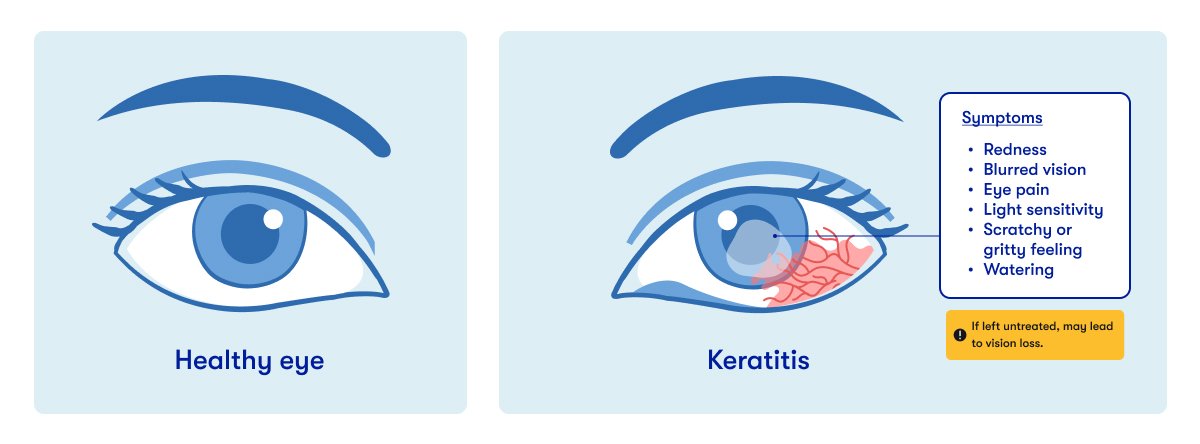
Healthy eye vs. keratitis
A healthy cornea is clear, smooth, and comfortable.
With keratitis, the cornea becomes inflamed, and symptoms typically go beyond mild irritation.
Common symptoms include:
-
Eye pain
-
Redness
-
Light sensitivity
-
Excess tearing
-
Blurred vision
-
A persistent foreign-body sensation
If these symptoms develop after contact lens wear, an eye exam is important.
What causes keratitis?
Infectious keratitis may be caused by:
Bacterial keratitis
Often linked topoor contact lens hygiene, contaminated lens cases, or sleeping in lenses.
Viral keratitis
Frequently associated with the herpes simplex virus.
Fungal keratitis
Less common but possible when fungal contamination occurs.
Acanthamoeba keratitis
A rare but serious infection associated with contact lenses and water exposure.
Swimming, showering, hot tubs, and tap water exposure while wearing lenses increases risk.
Noninfectious keratitis may be caused by:
-
Eye injuries
-
UV exposure
-
Severe dryness
- Certain autoimmune conditions
What are the first signs of keratitis?
Symptoms may include:
-
Eye pain that does not improve
-
Significant redness
-
Light sensitivity
-
Blurred vision
-
Excess tearing
-
Eye discharge
-
A persistent gritty sensation
Multiple symptoms occurring at the same time deserve prompt evaluation.
Contact lens overwear vs. keratitis
These conditions are related but not identical.
Contact lens overwear occurs when lenses reduce oxygen and moisture reaching the eye, causing irritation and inflammation.
Keratitis is an actual inflammation of the cornea itself.
Contact lens overwear can create small areas of corneal irritation that make infection more likely, which is why prolonged contact lens wear increases the risk of keratitis.
Can keratitis heal on its own?
Usually not.
Infectious keratitis generally requires medical treatment. Delaying care can allow the infection to worsen and increase the risk of corneal damage.
While mild corneal irritation caused by dryness or a minor scratch may improve with rest and lubrication, it can be difficult to tell the difference between irritation and infection without an eye exam.
Does corneal inflammation go away?
Sometimes, but it depends on the cause.
Mild inflammation caused by temporary dryness or contact lens irritation often improves after removing your lenses and allowing the eye to recover.
Inflammation caused by infection usually requires treatment.
If pain, redness, blurred vision, or light sensitivity persist, an eye exam is the safest next step.
How is keratitis treated?
Treatment depends on the cause.
Options may include:
-
Antibiotic eye drops for bacterial infections
-
Antiviral medications for viral keratitis
-
Antifungal treatment for fungal infections
-
Anti-amebic medications for Acanthamoeba keratitis
-
Anti-inflammatory medications in certain cases
In severe situations, more advanced treatment may be necessary.
Regardless of the cause, contact lenses typically need to be discontinued until an eye doctor says it’s safe to wear them again.
What is the fastest way to treat keratitis?
There isn’t a universal shortcut.
The fastest safe approach is:
-
Remove your contact lenses immediately.
-
Schedule an eye exam.
-
Follow the treatment recommended by your eye doctor.
Prompt diagnosis and treatment usually lead to the best outcomes.
How long does keratitis take to heal?
Recovery depends on:
-
The cause
-
Severity
-
How quickly treatment begins
Mild bacterial cases caught early may improve within days.
More severe bacterial cases, fungal keratitis, or Acanthamoeba infections may require weeks or even months of treatment.
Can wearing contacts too long cause permanent damage?
Most cases of mild contact lens overwear improve with rest.
However, serious contact lens-related infections can occasionally lead to:
-
Corneal ulcers
-
Corneal scarring
-
Vision loss
-
The need for a corneal transplant
These complications are uncommon, but prompt treatment is important whenever symptoms suggest an infection.
Why does keratitis keep coming back?
Recurring keratitis may happen because of:
-
Incomplete treatment
-
Poor contact lens hygiene
-
Wearing contacts longer than recommended
-
A contaminated lens case
-
Chronic dry eye
-
Repeated water exposure while wearing contacts
Addressing the underlying cause helps reduce the likelihood of recurrence.
How do you treat contact lens overwear?
If you’ve worn your contacts longer than recommended:
-
Remove the lenses immediately.
-
Switch to glasses temporarily.
-
Use lubricating eye drops if recommended.
-
Schedule an eye exam if symptoms are significant.
-
Wait for your eyes to recover before returning to contact lens wear.
An eye doctor can help determine whether irritation is simply from contact lens overwear or whether something more serious is developing.
Can I wear the same monthly contacts for two months?
No.
Monthly lenses are designed to be replaced about 30 days after opening.
Extending them beyond the recommended replacement schedule increases the risk of:
-
Deposits
-
Bacterial growth
-
Contact lens overwear
-
Infection
Even if the lenses feel comfortable, they should still be replaced on schedule.
How can you prevent contact lens irritation?
Healthy lens habits make a huge difference.
To help protect your eyes:
-
Wash your hands before handling contacts
-
Use fresh solution every time
-
Never top off old solution
-
Replace lens cases regularly
-
Follow replacement schedules
-
Avoid sleeping in contacts unless specifically approved
-
Avoid swimming or showering in contacts
What actually helps day-to-day irritation?
For mild contact lens discomfort:
-
Remove your lenses
-
Use preservative-free artificial tears
-
Take a break from contact lens wear
-
Apply a cool compress if needed
-
Inspect lenses for deposits or damage
-
Review whether you’ve exceeded your wear schedule
If irritation persists or matches any of the warning signs listed earlier, contact your eye doctor.
Frequently asked questions
What’s the longest I can wear contacts?
It depends on the lens and your doctor’s recommendations. Follow the wear schedule prescribed for your specific lenses and remove them earlier if your eyes become uncomfortable.
Can I sleep in my contacts?
Only if your lenses are approved for overnight wear and your eye doctor has confirmed they’re appropriate for you.
Is blurry vision normal after removing contacts?
Mild blurriness that clears quickly can happen with dryness. Blurred vision that persists or occurs with pain, redness, or light sensitivity should be evaluated.
What’s the difference between hypoxia and keratitis?
Hypoxia occurs when the cornea doesn’t receive enough oxygen. Keratitis is an inflammation of the cornea. Hypoxia may contribute to corneal irritation, which can increase infection risk.
Should I switch contact lens types if I keep getting irritation?
Possibly. Some people do better with daily disposables or higher-oxygen lens materials. Talk with your eye doctor about the best option for your eyes.
Can contact lens overwear improve without seeing a doctor?
Mild irritation often gets better after removing your lenses and using lubrication. Pain, redness, blurred vision, light sensitivity, or discharge are different and should be evaluated by an eye doctor rather than monitored at home.
Is Acanthamoeba keratitis common?
It’s rare, but it is serious. Most cases are associated with water exposure while wearing contact lenses.
The bottom line
Most eye irritation after removing contacts comes from dryness or mild contact lens-related irritation. But persistent pain, redness, blurred vision, light sensitivity, discharge, or persistent foreign-body sensation may indicate something more serious.
If you’re ever unsure, take your contacts out and leave them out until you’ve spoken with an eye doctor. When it comes to protecting your vision, it’s always better to check early than wait too long.
Did you know you can order contacts online?
Get the contacts you need when you need them. With 1-800 Contacts, you canorder your contacts in just a few taps and have them delivered right to your door. Need to renew your prescription? Our online vision exam makes it easy to do from home. New customers save on their first order.
Original published date: 1/24/2020
Updated date: 9/28/2026