


What is night blindness? (Nyctalopia)
If headlights at night feel like mini suns beaming directly into your soul, or you've walked face-first into a doorframe that wasn't there seconds before, you might be dealing with night blindness — also known by its fancier name, nyctalopia.
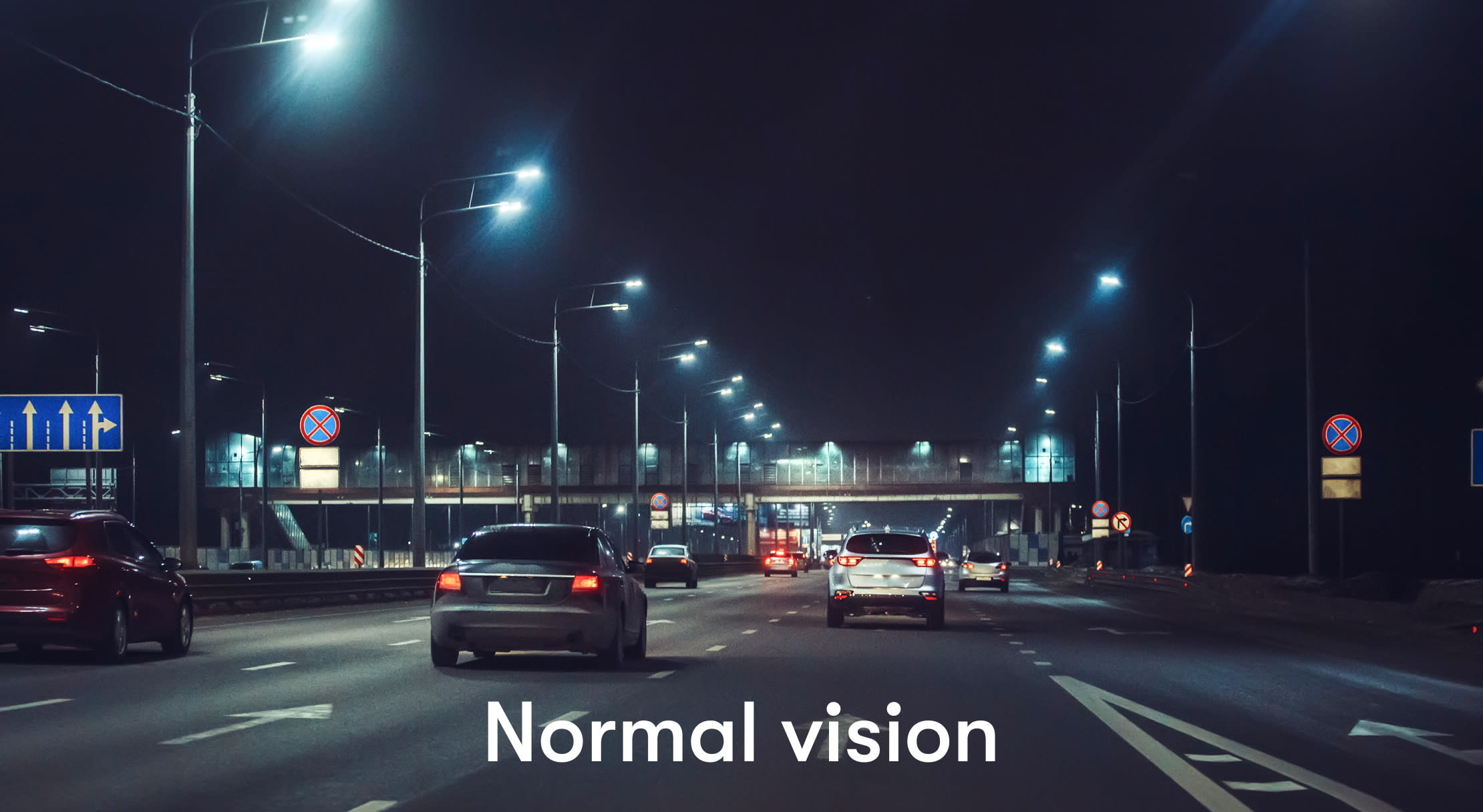
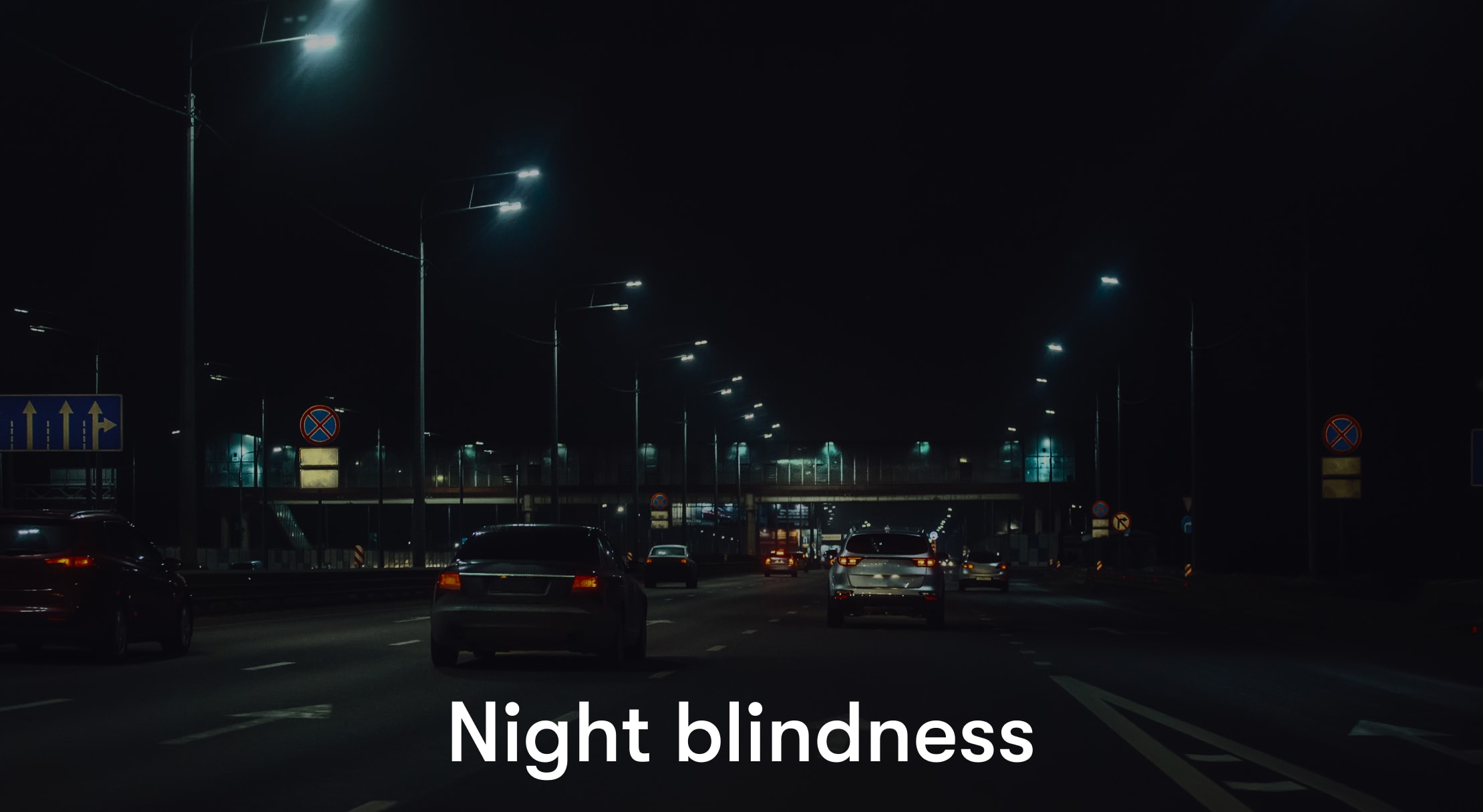
Night blindness doesn't mean complete darkness; it typically leads to difficulty seeing in dim light or at night, especially after being in bright light. People with nyctalopia often find it hard to adjust when the lights go down, like their eyes are buffering.
Your retinas have two types of photoreceptor cells. First off, you've got cones, which handle the glam hours. Then, there are rods. These guys work the night shift and don't get nearly enough credit for keeping you from walking into walls. When rod cells don't work properly, you can end up with night blindness.
It's more common than you might think. While there's no exact number, cataracts, nearsightedness, and even retinal diseases affect millions in the United States. It's not an "aging like fine wine" kind of situation — getting older is a risk factor.
But here's the thing, night blindness isn't a disease on its own. It's your eyes' way of alerting you that something's off, whether it's minor (needing new glasses) or more serious (having an underlying retinal condition). Either way, an eye care professional should always be your next stop. (And no, WebMD doesn't count as an eye pro!)
The good news? Night blindness can often be treated after your eye care professional determines the root cause. Sometimes, it's as simple as adjusting your prescription or getting some extra shut-eye to reduce eye strain. Other times, treatment might mean cataract surgery or managing a long-term condition.
Let's break down what kind of night blindness you might be dealing with and why your eyes may act like divas after dark.
Types of night blindness
Like most things in eye care, not all-night blindness is created equal. It comes in a few different flavors (none of which are mint chocolate chip, sadly).
The main types include:
-
Congenital night blindness: In this case, you're born with it, usually due to a genetic mutation that affects how your retina processes light. It's lifelong but stable, meaning your vision won't worsen over time.
-
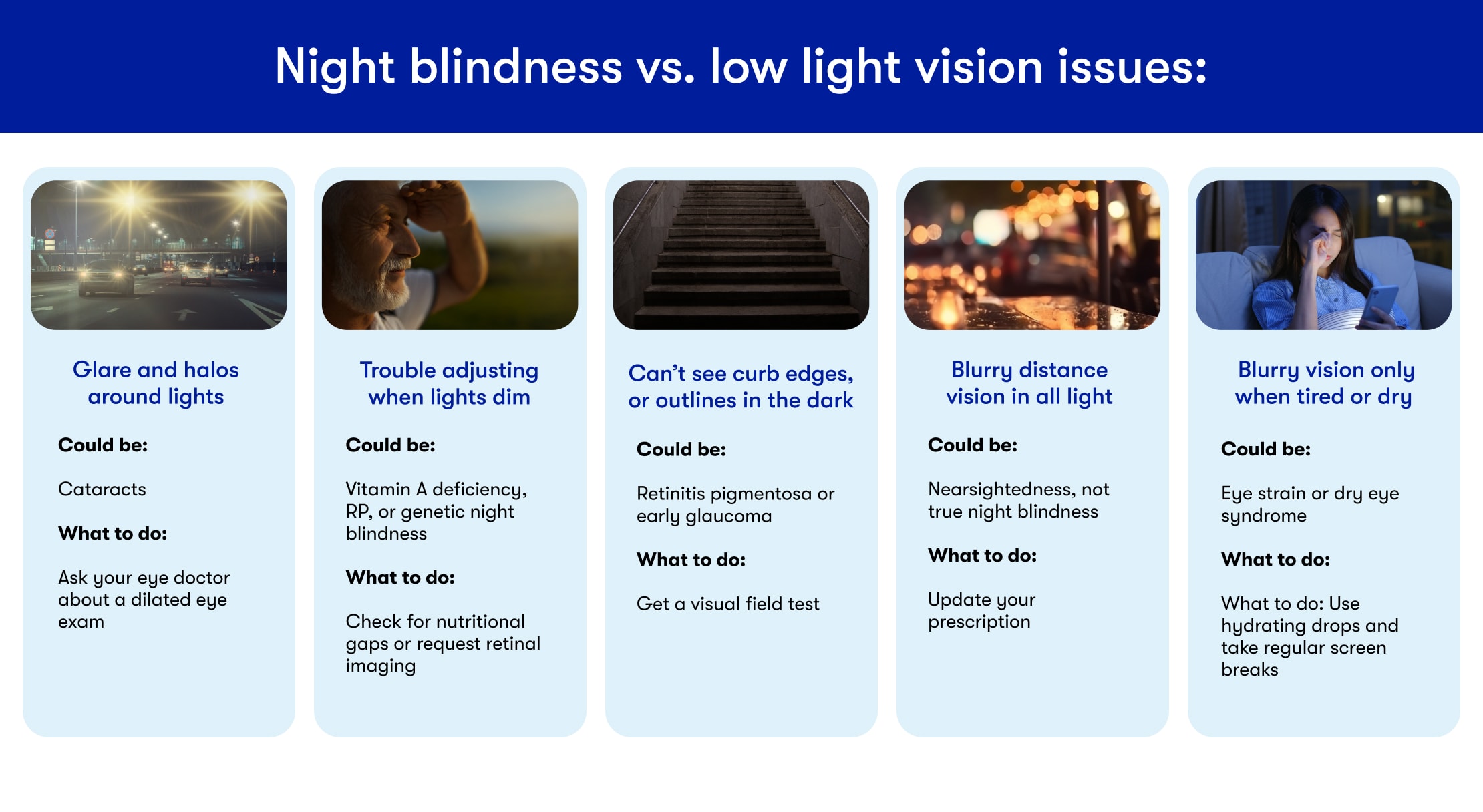
Cataract-related night blindness: With cataracts, cloudy lenses scatter light before it reaches your retina, making dark environments extra tough. Think of it as seeing through a fogged-up car window.
-
Nearsightedness-related night blindness: If you're already struggling to see distant objects, dim lighting and glare can make it even harder to focus. Ask your eye care professional whether an updated prescription might help.
-
Vitamin A deficiency: Your eyes need vitamin A to make rhodopsin, the light-sensitive pigment in your rods. Without it, they're running on low battery. Vitamin A deficiencies are rare in developed countries, but they're still possible in people with poor diets or liver disease.
-
Retinitis pigmentosa: This is a rare inherited disorder where your retina's outer edges start ghosting you. It can start with night blindness and, over time, narrow peripheral vision.
What causes night blindness?
Sometimes your genes or diet are to blame for night blindness, or it could be that life just handed your eyes a bad firmware update. Certain people inherit conditions that affect their retinas. Others develop it because of aging, diet, medications, or health issues that interfere with how the eye absorbs light.
Causes include:
-
Cataracts
-
Nearsightedness (myopia)
-
Vitamin A deficiency
-
Glaucoma medications
-
Retinitis pigmentosa
-
Diabetes
Symptoms: What does a night-blind person see?
Night blindness feels like your eyes are permanently a few steps behind when you're in the dark. Add a few headlights, and congrats — you've unlocked hard mode for driving.
You might notice:
-
Slow adjustment to darkness: Walking from bright sunlight into a dim hallway feels like someone hit the low-power switch on your vision.
-
Blurry or hazy vision in dim light: Streetlights, headlights, and reflective signs may halo, streak, or seem painfully bright.
-
Difficulty driving at night: Glare from oncoming traffic or wet roads makes it harder to see signs or pedestrians.
-
Trouble recognizing faces in dark rooms: You know someone waved, but you aren't sure if it was your friend or a coat rack.
-
Eye strain or squinting: Constantly forcing your eyes to focus can lead to headaches, fatigue, and even more squinting. (It's a vicious cycle.)
Diagnosis: Is there a test for night blindness?
Diagnosing night blindness starts with a comprehensive eye exam where your eye care professional plays detective for your retinas. They run a few painless tests to see how well your eyes handle the dark and what might be throwing them off their game.
You can also read about the difference between ExpressExam and an in-person eye exam to see which one fits your situation. Spoiler: For something like night blindness, the in-person exam wins every time. (Your laptop cam can't peek into your retina — not yet, anyway.)
During the visit, your eye care professional may dilate your pupils to examine the retina. You might take a visual field test, which measures peripheral vision, or a dark adaptation test, which checks how quickly your eyes recover when the lights dim. Sometimes, they even photograph the retina to spot microscopic changes invisible to the naked eye.
Only a licensed eye care professional can diagnose night blindness and uncover its cause. Online exams are handy for renewing prescriptions, but they can't spot retinal changes, cataracts, or nerve issues hiding behind the scenes.
Treatment
The treatment — think of it as couples therapy for you and your night vision — depends on what's dimming your view of the world.
Once your eye care professional identifies the root cause, your plan may include:
-
Updated prescription lenses: A fresh pair of contacts or glasses can sharpen your focus and cut the glare that makes night driving feel like a boss battle.
-
Cataract surgery: Swapping your fogged-up lens for a shiny new one can make the world look like it's running through an HD filter. Suddenly, the moonlight looks poetic again instead of vaguely threatening.
-
Dietary changes: Foods rich in vitamin A, such as carrots, spinach, sweet potatoes, and red bell peppers, keep your rods humming along nicely.
-
Managing other conditions: Controlling diabetes, adjusting medication, or treating retinal diseases can stop symptoms from worsening.
-
Low-vision aids: Tinted, polarized, or anti-glare lenses can make night environments easier to navigate if you suffer from a genetic condition like RP. It's not quite bionic vision, but you can look cool and avoid walking into your couch.
Prevention
Your retinas run on circulation, so hydrate like it's your job, sleep like it's sacred, take screen breaks before your rods riot, and keep your blood sugar steady. Wear sunglasses even when it's cloudy and blink more regularly when you're staring at screens.
If your nights are looking less city skyline and more pixelated mystery, it's probably time to let a pro take a peek behind the curtain. Eyes age, habits slip, and sometimes your rods just need a pep talk. Book your exam and find the brand of contacts your eye care professional prescribed at 1-800 Contacts.
Original publish date: 2/18/2022
Updated date: 12/9/2025