


What Causes Dry Eyes?
Some things are better when they're dry, like firewood when you're making s'mores and paint when you're leaning on a wall. But eyes, nope. They get itchy, irritated, and red. Unfortunately, there are many causes of dry eyes. Common culprits include aging, cold weather, indoor heating, chronic health conditions, and playing Candy Crush for hours on end. You don't need another striped candy, really!
At-home remedies, lifestyle changes, and medical treatment can ease your symptoms. You can even change your contact lenses to ones that support better hydration.
What are the main causes of dry eyes?
Figuring out why you have dry eyes is the first step to getting sweet, sweet relief. The causes of dry eyes fall into two camps.
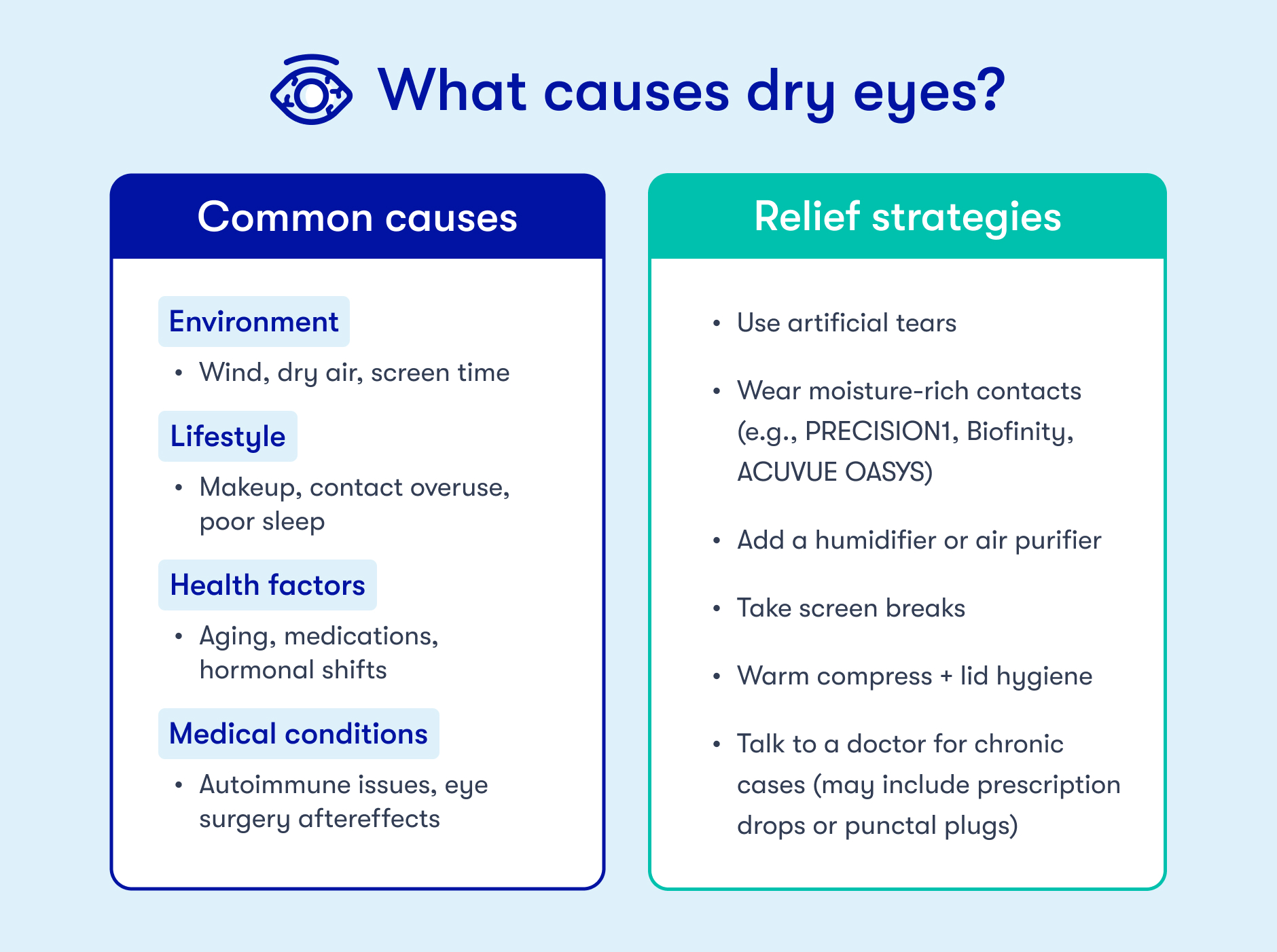
Situational dry eyes are caused by activities or the environment. Once the trigger's removed, your eyes tend to return to their bright, perky selves. Your eyes may feel parched from:
-
Windy, cold, or dry weather
-
Air-conditioned and heated rooms
-
Smoke, dust, and pollution
-
Flying on airplanes
-
Screen time
-
Wearing contact lenses for too long
-
Mascara, eyeliner, and cosmetics that can block eyelid glands
Chronic dry eyes are caused by underlying health issues and persistent stressors. Your eyes might feel dry long term because of:
-
Aging, which can cause a decrease in tear production
-
Medications, such as antihistamines, decongestants, and antidepressants
-
Hormonal changes from menopause and perimenopause
-
Chronic conditions such as diabetes and autoimmune diseases
-
Contact lenses that don't suit the needs of your eyes
Can dry eyes be a symptom of something serious?
In most cases, dry eyes are a nuisance caused by a bitterly cold day or dust-bunny takeover. Your eyes usually feel better when the source of trouble is gone. Sometimes, persistent dry eyes can be a sign there's something health-related going on. Maybe your eyes aren't producing enough tears. Medical conditions such as thyroid issues, diabetes, lupus, rheumatoid arthritis, and Sjögren syndrome can also affect tear production.
But don't hit the panic button. Dry eyes are nothing new, affecting about 16.4 million Americans. Before self-diagnosing, the best thing to do is call your eye care professional. They can perform a routine examination to figure out why your eyes are lacking moisture, help screen for health issues, and recommend next steps.
How do you fix dry eyes?
Moisture-starved eyes don't have to be your new normal. Lifestyle tweaks, over-the-counter products like eye drops or solution, and home remedies can help ease your symptoms. And if there's a medical condition involved, team up with your health care provider to figure out a game plan.
At-home options for dry eye treatment
Dry eyes are letting you know they're thirsty, like toddlers asking for juice. Give them a hydration boost (before they start screaming) with some simple home remedies:
-
Use a humidifier and bask in moisture-rich air.
-
Ask your pharmacist for artificial tears or lubricating drops.
-
Treat your eyes (close 'em first) to a warm, moist compress.
-
Keep your eyelashes and eyelids clean to get rid of debris, oil, and eye boogers (yes, they're a thing!).
-
Blink, and then blink some more, to help spread tears across your eyes.
Does drinking water help dry eyes?
Tears are made of water with some oil and mucus tossed in. Your body needs to be hydrated to create tears and maintain the moisture balance in your eyes.
But the human body is remarkably complex, so drinking water on its own won't cure dry eyes permanently. You'll have to address the root causes of your dry, itchy eyes, such as a lack of humidity in your home or an illness. However, staying hydrated doesn't hurt, and it improves your overall health.
Make sure you're getting enough H2O by:
-
Drinking water when you get up in the morning
-
Carrying a water bottle with you
-
Eating water-rich foods such as grapes and melons
-
Replenishing water lost during exercise or hot weather
Other lifestyle changes
Your day-to-day routine has a bigger impact on your eyes than you think. Long hours at a computer, jaunts with your pup on a windy day, and a few late nights can all contribute to thirsty eyeballs.
Lifestyle adjustments can help keep your eyes fresh and comfortable:
-
Use an air purifier to remove dust particles, pollutants, and other irritants from your home.
-
Slip on sunglasses to protect your eyes from the sun and wind.
-
Avoid air blowing directly toward your face in an air-conditioned or heated room.
-
Tuck yourself into bed early, as lack of sleep can reduce tear secretion and make dry eyes worse.
-
Ask your health care provider about taking omega-3 fatty acids, which can encourage your eyes to produce more tears.
-
Take regular screen breaks, whether you're powering through a PowerPoint at the office or bingeing The Office.
Medical treatments for dry eye
Sometimes, thirsty eyes need more than home care. That's when it’s time to call in the cavalry — or at least your doctor. Your health care provider can tailor a solution based on the causes of your dry eyes. They may prescribe medication to encourage tear production or suggest a procedure like punctal plugs to keep moisture in your eyes. (Yes, that sounds intimidating, but no, it's painless). In some cases, surgical treatments can help restore moisture balance.
Contacts for dry eyes
We get it. When your eyes are as dry as the Mojave Desert, the last thing you want is to stick a plastic contact lens in them. But some manufacturers make contacts with high water content to give your eyes much-needed moisture. Ask your eye care professional about swapping out your contacts for ones offering more hydration.
Here are some options that may be a good match for your eyes:
-
ACUVUE OASYS with HYDRACLEAR Plus is a soft, disposable contact lens with biweekly replacement schedule. Designed with dryness-reducing technology to keep eyes comfortable, this lens has 38% water content.
-
For a daily disposable soft contact, consider 1-Day ACUVUE Moist. Made with a moisture-rich ingredient so hydration is built right into the lens, these contacts contain 58% water content.
-
Another option for daily disposables are PRECISION1 One-Day Contacts. They feature a layer of moisture around each lens to keep the contact from drying out and contain 51% water content.
-
For those with a multifocal prescription, Biofinity (also known as Aquatech Plus Premium) is a monthly disposable contact. Made with a material that holds water to resist dehydration, this lens has 48% water content.
Contact lenses to help with dry eye treatment
Dry eyes can be frustrating, but you can get relief with lubricating eye drops, warm compresses, plenty of shut-eye, and medical treatment. If you wear contacts, you can buy lenses that add moisture to your eyes while improving your vision.
Your eye care professional can help figure out what's causing your dry eyes and recommend a moisture-rich contact lens. Once you have a prescription, head to the 1-800 Contacts website where you can order your contact lenses online. Shipping is free, and your purchase is backed by our Gajillion Percent Promise. Farewell, dry eyes!
Did you know you can order contacts online?
Say goodbye to trips to the eye doctor and hello to convenience! With 1-800 Contacts, you can easily order your contact lenses online and have them delivered straight to your door. Plus, our online vision exam makes it simple to get the prescription you need without leaving home. And the best part? You’ll save money on your first order with 1-800 Contacts. It’s never been easier to get your contacts!
Original publish date: 3/16/2021
Updated date: 1/5/2026