What Is Glaucoma? Symptoms, Stages, Causes & Treatment
Glaucoma is a group of eye diseases that damage the optic nerve — the connection between your eyes and your brain. It’s one of the leading causes of permanent, irreversible vision loss worldwide. The most dangerous thing about it: most people have no symptoms until significant damage has already occurred.
That puff of air your eye doctor sends at your eye? That’s a glaucoma pressure screening. It’s quick, painless, and one of the most important tests you shouldn’t skip.
What is glaucoma?
Glaucoma damages the optic nerve, which carries visual signals from your eye to your brain. When that nerve is damaged, those signals don’t get through — and vision loss follows.
In most cases, damage is caused by elevated intraocular pressure (IOP) from fluid buildup inside the eye. But glaucoma can also develop in people with completely normal eye pressure, which is part of what makes it hard to detect without regular exams.
Glaucoma is the second leading cause of blindness worldwide. The vision loss it causes cannot be reversed — which is why catching it early is so important.
Types of glaucoma
Primary open-angle glaucoma
The most common type. Fluid builds up gradually because the eye’s drainage system isn’t working efficiently, and pressure on the optic nerve slowly increases. No pain, no early symptoms — just quiet, progressive damage. The first noticeable sign is usually peripheral vision loss. Risk factors include age 40+, nearsightedness, diabetes, high blood pressure, and family history.
Angle-closure glaucoma
The iris bulges forward and blocks the eye’s drainage system. This can happen suddenly (an acute attack, which is a medical emergency) or develop slowly. Acute symptoms include severe eye pain, redness, blurred vision, halos around lights, and nausea. If these come on suddenly, seek emergency care immediately. More common in women and in people who are farsighted.
Normal-tension glaucoma
Optic nerve damage occurs despite normal eye pressure. Likely linked to poor blood flow to the optic nerve. More common in women and people with low blood pressure or cardiovascular issues. Because there’s no pressure spike to flag, it’s especially easy to miss.
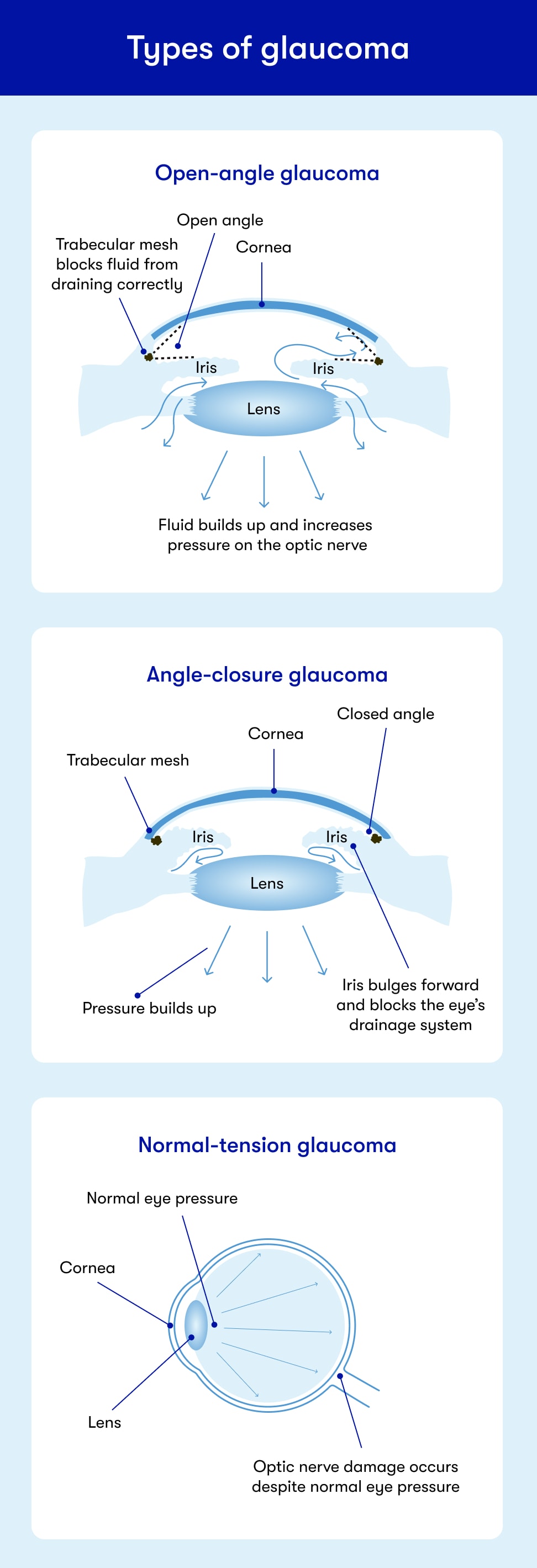
The 5 stages of glaucoma
Glaucoma is typically classified into five stages based on how much optic nerve damage and visual field loss has occurred. Staging helps eye doctors determine the right treatment intensity and monitoring schedule.
-
Stage 0 — No glaucoma (suspect): Eye pressure may be elevated or the optic nerve may look slightly unusual, but no definitive vision loss yet. Close monitoring begins here.
-
Stage 1 — Mild: Early optic nerve damage is detectable on imaging, but peripheral vision loss is minimal and may not be noticeable in daily life. Most people have no idea anything is wrong. This is the best time to start treatment.
-
Stage 2 — Moderate: Noticeable blind spots develop in the peripheral visual field. Vision is still functional, but gaps are measurable on testing.
-
Stage 3 — Advanced: Significant peripheral vision loss. Central vision may begin to be affected. Daily activities like driving may become difficult or unsafe.
-
Stage 4 — Severe / End-stage: Very little functional vision remains, often limited to light perception or central tunnel vision. Aggressive treatment focuses on preserving whatever vision is left.
The earlier glaucoma is detected and treated, the more vision can be preserved. Moving from stage 1 to stage 4 can take years or even decades with proper management — or progress faster without it.
What happens if glaucoma is caught early?
Early detection is the single most important factor in preserving vision with glaucoma. When caught at stage 1 or 2, treatment can slow or stop progression entirely for many people. Most people diagnosed and treated early maintain good functional vision for the rest of their lives.
This is why routine eye exams matter even when you feel completely fine. There are no symptoms to warn you in the early stages — an exam is the only way to know.
Glaucoma symptoms
In its early stages, the most common type of glaucoma has no symptoms at all. As it progresses:
-
Loss of peripheral vision: Usually the first sign — patchy blind spots at the edges of your visual field.
-
Tunnel vision: In advanced stages, vision narrows significantly toward the center.
-
Blurred vision: More common in angle-closure or advanced cases.
-
Eye pain or pressure: Mainly with angle-closure glaucoma.
-
Halos around lights: Especially noticeable at night.
-
Redness, headache, or nausea: Can accompany acute pressure spikes.
Because open-angle glaucoma is essentially symptom-free until it’s advanced, regular eye exams are the only reliable early detection tool.
Glaucoma causes and risk factors
The primary cause is fluid buildup that increases eye pressure, damaging the optic nerve. Secondary causes include eye injuries, long-term corticosteroid use, and conditions like diabetes, high blood pressure, and sickle-cell anemia.
Key risk factors:
-
Age 40 or older
-
Family history of glaucoma
-
High intraocular pressure
-
African, Asian, or Hispanic heritage
-
Extreme nearsightedness or farsightedness
-
Diabetes, high blood pressure, or migraines
-
Long-term steroid use
-
History of eye injury or surgery
How is glaucoma diagnosed?
Diagnosis happens through a comprehensive eye exam. Key tests include:
-
Tonometry: Measures intraocular pressure (the air-puff test, or a probe that touches the eye surface).
-
Visual field test: Maps peripheral vision to check for blind spots.
-
Optical coherence tomography (OCT): Detailed imaging of the retina and optic nerve to detect structural changes before vision loss appears.
-
Dilated eye exam: Allows direct examination of the optic nerve.
-
Pachymetry: Measures corneal thickness, which affects how pressure readings are interpreted.
Glaucoma Treatment
There’s no cure for glaucoma, and lost vision can’t be restored. But the right treatment can slow or stop progression. The goal is to lower intraocular pressure and protect the optic nerve.
-
Eye drops: First line of treatment. Prostaglandin analogs improve drainage; beta blockers reduce fluid production. Consistency is critical — missed doses allow pressure to rise.
-
Laser therapy: Selective laser trabeculoplasty (SLT) improves drainage for open-angle glaucoma. Laser peripheral iridotomy treats angle-closure by opening the iris.
-
Surgery: Trabeculectomy creates new drainage pathways. Minimally invasive glaucoma surgeries (MIGS) use tiny devices with faster recovery.
-
Oral medications: Carbonic anhydrase inhibitors reduce fluid production when drops aren’t enough.
Glaucoma treatment is lifelong. Regular follow-up exams are essential to monitor pressure, track optic nerve health, and adjust treatment as needed.
What to avoid if you have glaucoma
Alongside treatment, certain habits can make glaucoma harder to manage:
-
Skipping eye drops: Inconsistent use is the most common reason glaucoma progresses when it shouldn’t. Eye drops only work when you use them.
-
High caffeine intake: Large amounts of caffeine can temporarily raise intraocular pressure. Moderation is reasonable, especially if pressure is hard to control.
-
Inverted positions: Yoga poses like headstands or downward dog can temporarily spike eye pressure. Check with your eye doctor before continuing inverted exercises.
-
Tight neckwear: Tight collars or ties can restrict blood flow and increase eye pressure.
-
Smoking: Reduces blood flow to the optic nerve and increases oxidative stress, both of which worsen glaucoma.
-
Skipping follow-up exams: Glaucoma requires ongoing monitoring. Missing appointments means missing changes in pressure or optic nerve status that need a treatment adjustment.
How to relieve eye pressure naturally
Natural strategies can support — but not replace — medical treatment for glaucoma. If you’ve been diagnosed, these are helpful additions to your care plan, not alternatives to it:
-
Regular aerobic exercise: Studies show moderate exercise like walking or cycling can lower intraocular pressure over time.
-
Eat antioxidant-rich foods: Leafy greens, colorful vegetables, and foods high in vitamins C and E support optic nerve health and reduce oxidative stress.
-
Stay hydrated, but avoid large amounts of fluid at once: Drinking a large volume of water quickly can temporarily raise eye pressure. Sip fluids steadily throughout the day instead.
-
Sleep with your head slightly elevated: A slightly elevated pillow position can help reduce the pressure spike that occurs when lying flat.
-
Reduce stress: Chronic stress raises cortisol levels, which may affect eye pressure over time.
-
Limit caffeine: Especially if your pressure is difficult to control.
None of these will treat glaucoma on their own. Think of them as supporting your prescribed treatment, not substituting for it.
Does glaucoma affect life expectancy?
Glaucoma does not shorten life expectancy. It is not a life-threatening condition. What it threatens is vision — specifically, the permanent, irreversible loss of it if left unmanaged.
With early detection and consistent treatment, most people with glaucoma live full, active lives with functional vision for decades. The condition requires lifelong management and regular monitoring, but it is very livable. The biggest risk isn’t glaucoma itself — it’s not knowing you have it until too much vision has already been lost.
Frequently asked questions about glaucoma
What are the early symptoms of glaucoma?
In the most common form (open-angle glaucoma), there are no early symptoms. The first noticeable sign is usually peripheral vision loss — by which point meaningful damage has often already occurred. Angle-closure glaucoma can cause sudden severe eye pain, redness, and blurred vision, which is a medical emergency.
What are the 5 stages of glaucoma?
The five stages range from stage 0 (suspected glaucoma with no confirmed damage) through stage 1 (mild, early optic nerve changes), stage 2 (moderate peripheral vision loss), stage 3 (advanced, significant vision gaps), to stage 4 (severe end-stage with very limited functional vision). Early treatment at stage 1 or 2 can preserve vision for life.
What is first stage glaucoma?
Stage 1 (mild) glaucoma involves early, detectable optic nerve damage on imaging, with minimal peripheral vision loss that may not be noticeable in daily life. Most people at this stage have no symptoms at all. It’s the best time to begin treatment — the earlier you start, the more vision can be preserved.
At what age does glaucoma typically start?
Risk increases significantly after age 40, and glaucoma is one of the leading causes of vision loss in people over 60. However, it can occur at any age, including in children (congenital glaucoma) and young adults. Adults 40+ should be screened regularly even without symptoms.
Is glaucoma curable?
No. There is currently no cure for glaucoma, and vision lost to it cannot be restored. However, with early detection and consistent treatment, progression can be slowed or stopped — and most people preserve good functional vision for life.
What should you avoid with glaucoma?
Skipping eye drops, high caffeine intake, inverted yoga poses, smoking, and tight neckwear can all worsen eye pressure or reduce blood flow to the optic nerve. Skipping follow-up exams is the biggest risk — glaucoma needs ongoing monitoring to catch changes before they become permanent.
The best thing you can do for your eye health is stay on top of regular exams.
Did you know you can order contacts online?
Skip the extra trips to the doctor’s office. With 1-800 Contacts, you can order your contacts in just a few clicks and have them delivered right to your door. New customers save on their first order.
Original publish date: 8/1/2023
Updated date: 8/25/26