


Are preservative-free eye drops better for your eyes?
If you’ve ever stood in the eye care aisle staring at 47 nearly identical boxes and wondering whether preservative-free eye drops are worth it, you’re not alone. Preservative-free eye drops are lubricating drops that don’t contain chemical preservatives, which means they’re designed to lower the risk of irritation, especially if you use them often or have sensitive eyes. You might also see them called non-preservative eye drops for dry eyes. They’re a great option for some people, but they aren’t automatically better for everyone (sorry, there’s no one-size-fits-all magic bottle).
Let’s break it down in plain English, minus the lab coat vibe.
What are preservative-free eye drops?
Preservative-free eye drops are artificial tears or medicated drops that don’t include added preservatives to prevent bacterial growth.
In many traditional eye drops, preservatives are added so the solution can stay safe inside a multi-dose bottle after you open it. Every time you squeeze that bottle, a little air (and potentially bacteria) can get inside. Preservatives help prevent contamination and extend shelf life. Practical, right?
The tradeoff is that preservatives, especially with frequent use, can irritate the surface of your eyes. For people who only use drops once in a while, this usually isn’t a big deal. But for someone using drops four, five, or six times a day (hello, dry office air, contact lenses, and endless screen time), those preservatives can start to feel less like helpers and more like party crashers.
Preservative-free eye drops solve that by removing the preservatives entirely. They often come in single-use vials, which you twist open, use, and then toss. Some newer multi-dose preservative-free bottles use special filters or one-way valves to keep bacteria out without relying on chemicals. It’s like a tiny high-tech security system for your tears.
Situations where preservative-free options are often recommended include:
-
Frequent dry eye treatment
-
Sensitive eyes that react easily
-
Contact lens wearers
-
Post-procedure care (as directed by your eye care professional)
-
Chronic dry eye conditions requiring multiple daily applications
If you’re reaching for drops regularly, preservative-free eye drops can reduce the cumulative irritation that sometimes builds up over time. If you’re using drops once every few weeks, you may not notice much difference at all.
Order Contact Lenses Online
Learn how to order contact lenses online at 1-800 Contacts
Order contacts
Is it okay to use preservative-free eye drops daily?
Daily use of preservative-free eye drops is generally considered safe for most people, especially when used as directed.
That said, eye drops aren’t meant to replace a proper evaluation if symptoms persist. If your eyes feel dry, gritty, red, or irritated every single day, that’s worth a conversation with an eye care professional. Drops can help manage symptoms, but they’re not always the full solution.
Benefits of preservative-free eye drops
There are several reasons people look for the best preservative-free eye drops instead of standard options.
-
Lower risk of irritation with frequent use. If you’re applying drops multiple times a day, skipping preservatives can help minimize surface irritation. Think of it as reducing background noise for your eyes.
-
May be more comfortable for sensitive eyes. Some people’s eyes react to preservatives even with occasional use. Preservative-free formulas tend to feel gentler, especially for those who already have redness, dryness, or sensitivity.
-
Often recommended for people who use drops multiple times per day. Chronic dry eye, extended screen time, and certain medical conditions can all require frequent lubrication. Non-preservative eye drops for dry eyes are commonly suggested in these situations.
-
Can be suitable for contact lens wearers, depending on the product. Some preservative-free drops are labeled as safe to use with contact lenses. Always check the packaging and instructions. If you’ve ever put in the wrong kind of drop with lenses in, you know it’s an experience you only need once (and then you read every label forever).
Disadvantages of non-preservative eye drops
They’re not perfect, and there are a few downsides to consider before declaring them the undisputed champion of the eye aisle.
-
Often more expensive per dose. Single-use packaging and specialized bottles can cost more. If you’re budget-conscious and only use drops occasionally, the price difference might matter.
-
Single-use vials can be less convenient to carry or store. Those tiny plastic vials are handy at home but can multiply in your bag like mysterious little eye-drop gremlins. Organization helps.
-
Shorter shelf life after opening. Once you open a single-use vial, it’s meant to be used right away and discarded. Multi-dose preservative-free bottles may have specific time limits after opening, so check the label.
-
Not always necessary for occasional users. If you use drops once in a blue moon, standard eye drops with preservatives are often perfectly fine. In that case, you may not need to hunt down the best eye drops without preservatives.
What eye drops have no preservatives?
Many major brands offer preservative-free formulations, either as single-use vials or special multi-dose bottles.
Availability varies by product line, and some well-known drops come in both preserved and preservative-free versions. For example, Lumify offers a preservative-free option in certain formats. It’s always a good idea to read the packaging closely, because the names can look nearly identical at a glance (manufacturers love subtle differences).
Here are a few general examples of categories and brands that often include preservative-free options:
-
Lumify preservative-free formulations
-
Systane preservative-free artificial tears
-
Refresh preservative-free artificial tears
-
TheraTears preservative-free lubricating drops
-
Store-brand preservative-free artificial tears
This list is intentionally high-level. A more detailed breakdown of the best preservative-free eye drops will dig into specific ingredients, use cases, and pros and cons for each formula. Once that guide is live, you’ll be able to compare options side by side instead of decoding ingredient lists like a detective.
Is it better to buy preservative-free eye drops?
It depends on your needs, habits, and preferences.
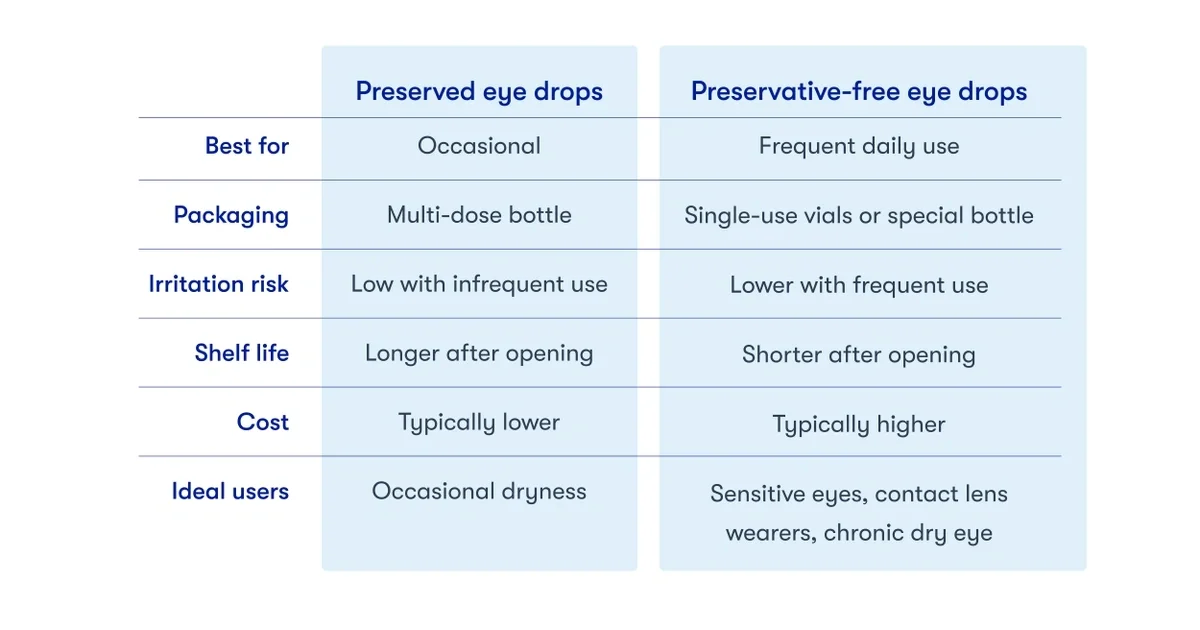
Preservative-free eye drops can be incredibly helpful in the right situation, but they’re not universally necessary. Choosing between preserved and non-preservative eye drops comes down to a few main factors:
-
Frequency of use. If you’re using drops several times a day, preservative-free formulas are often a smart choice.
-
Eye sensitivity or history of irritation. If your eyes tend to react to products easily, skipping preservatives may reduce discomfort.
-
Budget and convenience preferences. Single-use vials and specialized bottles can cost more and take up space. If convenience and price are top priorities, standard multi-dose bottles might make more sense.
-
Guidance from an eye care professional. An eye care professional can recommend the right type of drop based on your symptoms, contact lens use, medical history, and overall eye health.
Preservative-free eye drops aren’t automatically better in every situation, but they’re an option for people who need frequent lubrication or have sensitive eyes. If you’re unsure where to start, we can help you explore different types of drops and even complete an online vision exam when appropriate. Your eyes do a lot for you every day. Giving them the right kind of support is just one small step that can make a big difference for good.