


Eye drops for contacts lenses
If you wear contact lenses, dry or irritated eyes can be more than just uncomfortable, they can make lenses hard to tolerate. The key is choosing eye drops that are designed to work with your contact lenses, not against them. Using the wrong product can cloud lenses, cause buildup, or worsen irritation.
This guide explains which eye drops are safe for contact wearers, how rewetting drops for contacts work, and how to choose an option that fits your symptoms and routine.
What eye drops are safe to use with contacts?
Only rewetting drops labeled for contact lenses are designed to be used while wearing contacts. These drops lubricate both the eye and the lens surface, helping reduce dryness and friction during wear.
When checking a label, look for clear instructions stating the drops can be used while contact lenses are in. The label or packaging should clearly state “for contact lenses” or “contact lens rewetting drops”.
Common contact‑safe ingredients to watch for:
-
Carboxymethylcellulose (CMC): helps stabilize moisture on the lens
-
Sodium hyaluronate (hyaluronic acid): holds water for longer‑lasting hydration
-
Hypromellose: reduces friction between the lens and eye
Why these ingredients matter for contact lenses
Contact‑safe ingredients aren’t just about comfort. They’re about how eye drops interact with lens materials, especially modern silicone hydrogel lenses.
Sodium hyaluronate (hyaluronic acid): binds water and forms a smooth, cushiony layer between the eye and the lens. This helps reduce friction and discourages protein deposits, which are more likely to build up on silicone hydrogel lenses due to their higher oxygen permeability.
Carboxymethylcellulose (CMC): increases tear film stability by evenly coating the lens surface. This prevents dry spots on the lens that can attract tear proteins and debris over time.
Together, these ingredients encourage the maintenance of a consistent moisture layer, reducing lens dryness and minimizing the buildup that can make lenses feel gritty or cloudy by the end of the day.
Rewetting drops vs. regular eye drops
Although they’re often confused, rewetting drops and regular eye drops are not interchangeable.
Rewetting drops for contacts:
-
Designed for use during lens wear
-
Lubricate the lens
-
Can be used multiple times a day
Regular dry eye or medicated drops:
-
Treat the eye surface only
-
Often require removing contacts
-
Can cause lens clouding or residue if used improperly
Remember, if an eye drop label does not clearly state it’s safe for contact lenses, remove your contacts first before using them.
Why thick eye drops can make contacts feel “stuck”
Some artificial tears are designed to be very thick (high‑viscosity) to stay on the eye longer. While helpful without contacts, these drops can cause problems during lens wear.
High‑viscosity drops can:
-
Create suction between the lens and cornea
-
Reduce normal tear exchange under the lens
-
Cause lenses to feel tight, heavy, or difficult to move
In some cases, the lens may temporarily swell or lose its proper fit. Rewetting drops, by contrast, are formulated to remain lightweight so lenses can continue to move and breathe naturally.
Common eye drops contact wearers use
Different eye drops serve different needs. Below are commonly used over‑the‑counter options, along with guidance on how they’re typically used.
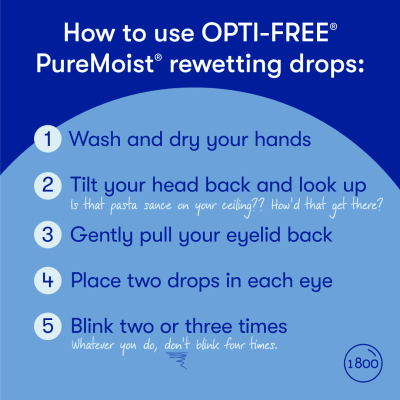
OPTI‑FREE Puremoist Rewetting Drops
Type: Rewetting drops for contacts
These drops are formulated specifically for use while wearing contact lenses. They’re commonly used to relieve dryness or discomfort that builds up over the course of the day, especially during long wear times or extended screen use.
-
Designed to lubricate both the lens and the eye
-
Labeled for use with contact lenses
Systane Ultra
Type: Artificial tears (some contact‑safe formulations)
Systane Ultra is formulated to stabilize the tear film and relieve dry eye symptoms. Some versions are labeled as safe for use with contact lenses, while others recommend removing contacts first.
-
Check packaging carefully for contact lens guidance
-
May be used either during wear or before/after wear, depending on formulation
Systane Balance
Type: Lipid‑based artificial tears
Systane Balance supports the eye’s natural oil (lipid) layer and is typically used for evaporative dry eye. Because of its formulation, it’s generally used before inserting contacts or after removing them rather than during lens wear.
-
Often used outside of contact wear
-
May cause temporary blur if used while wearing lenses
Eye drops to avoid
-
Redness‑relief drops: may lead to rebound redness and lens deposits
-
Oil‑based or medicated drops: may blur vision or stain soft lenses
-
Non‑contact dry eye drops: unless lenses are removed first
Why oil‑based drops are a problem for contacts
Oil‑based or lipid‑heavy eye drops can cause more than temporary blur when used with contact lenses.
Because soft lenses are porous, oils can bead on the lens surface instead of spreading evenly. Once this happens, the residue can’t always be fully removed with cleaning solutions. In many cases, the only fix is discarding and replacing the lenses, even if they’re new.
For this reason, oil‑containing drops are best used only when lenses have been removed, either before or after wearing them.
Preservative‑free eye drops: when do I need them?
If you use eye drops frequently or have sensitive eyes, preservative‑free options may be more comfortable over time. These often come in single‑use vials and may be labeled safe for contact lenses.
Preservative‑free drops are commonly chosen by people who:
-
Use drops several times a day
-
Have chronic dryness or allergies
-
Wear contacts for long hours
Preservatives to look out for
Some multi‑use eye drops contain preservatives designed to kill bacteria, but when trapped beneath a contact lens, those preservatives can irritate the cornea.
One of the most common is BAK (benzalkonium chloride): a preservative known to disrupt corneal cells and worsen dryness when exposure is repeated or prolonged.
When preservatives like BAK sit between the lens and the eye, they aren’t diluted by natural tears as effectively, which increases irritation risk.
Preservative‑free options like these may help avoid this issue.
-
Single‑use vials: often preferred for sensitive or dry eye patients
-
Multi‑dose preservative‑free (MDPF) bottle: these may use special valve systems instead of chemical preservatives
Both formats can be beneficial for contact wearers who rely on drops throughout the day.
Extra Tips to Reduce Dryness While Wearing Contacts
In addition to using contact‑safe eye drops, there are several small adjustments you can make to see a noticeable difference in wear. Use rewetting drops before inserting lenses to reduce initial friction. Make a conscious effort to take “eye breaks” by regularly blinking and looking away from your screen when working on digital devices. Also, avoid airflow from fans or vents aimed directly at your eyes whenever possible. Together, these steps can help preserve the tear film and reduce evaporation while wearing your contact lenses.
When to See an Eye Doctor
If dryness or irritation continues despite using contact‑safe drops, an eye care professional can help evaluate whether:
-
A different drop is needed
-
Adjustments to your contact lenses could help
-
An underlying dry eye condition is present
Bottom Line
The best eye drops for contacts are those specifically designed for contact lens wear. Rewetting drops are generally the safest choice during wear, while allergy and many dry eye drops should be used only when lenses are out.
Reading labels carefully, choosing drops that match your symptoms, and following use instructions can help keep your eyes comfortable and your contacts performing as intended.
Original published date: 6/17/2020
Updated: 5/22/2026