


What hydrophobic coating for glasses does
Hydrophobic coating on glasses causes water to bead up and roll off lenses instead of spreading across the surface. That's the whole idea in plain English. It doesn't stop water from touching your lenses (no invisible force field, unfortunately), but it does make that contact way less irritating.
It's worth setting expectations early. You'll still get raindrops, splashes, and the occasional "why is it humid inside this building?" moment. The difference is that instead of turning your lenses into a smeary mess, those droplets bead up and slide off like they've got somewhere better to be.
And in real life, that's actually a big deal. You'll spend less time aggressively polishing your lenses on your shirt (a universal experience we all pretend we don't have), and more time seeing clearly.
Here's what we're getting into:
-
How hydrophobic coating works at a surface level
-
The different types you'll run into
-
What to look for when shopping or reading reviews
-
How well it actually performs in the real world
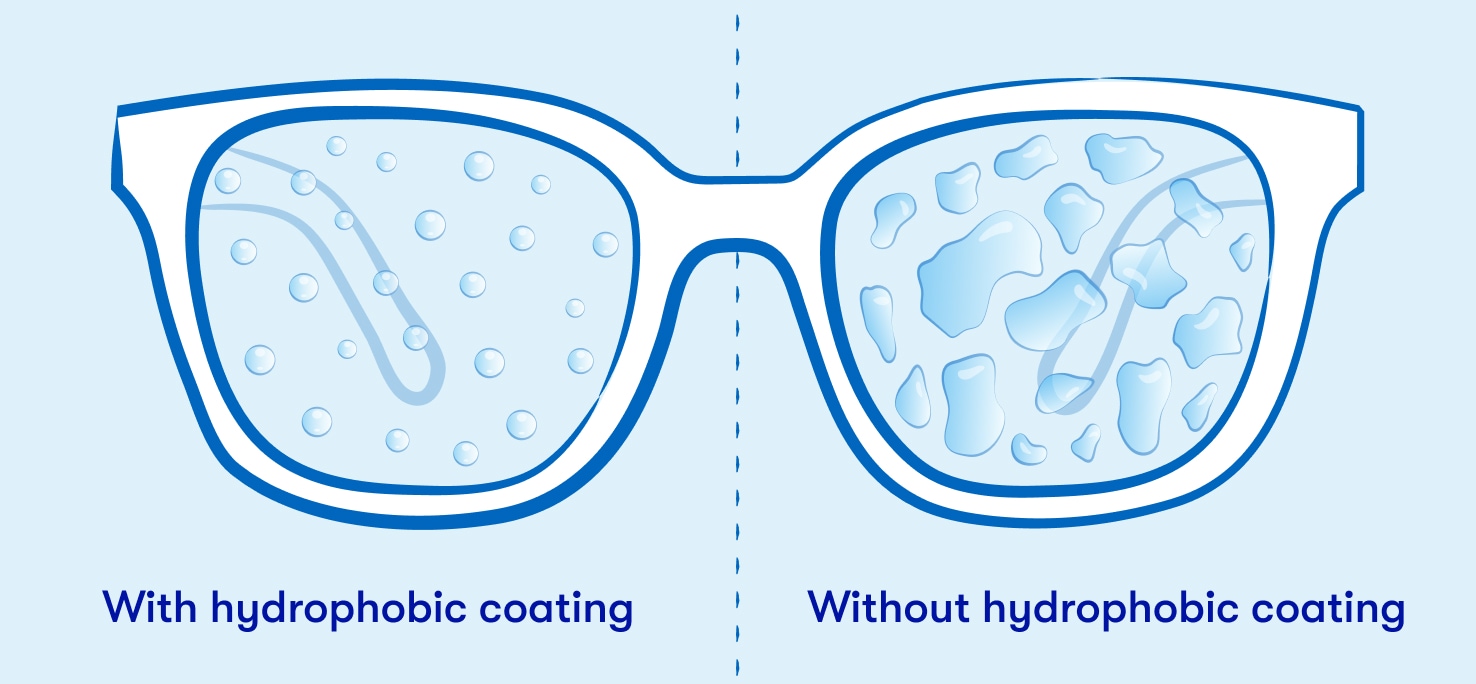
How hydrophobic lens coating works
Hydrophobic lens coating works by creating a microscopically smooth surface that water molecules can't grip, so they bead up and roll off instead of spreading.
Without that coating, lenses have tiny imperfections all over them. Water spreads into those little grooves and turns into a thin film, which causes that foggy, smeary look that makes you question your life choices (or at least your route home).
What you get with hydrophobic lenses is pretty practical:
-
Water beads instead of smearing
-
Smudges don't hang around as long
-
Cleaning is quicker and less frustrating
-
Vision stays clearer in light rain or humidity
While it's not a miracle product, it definitely feels like one the first time you get caught in a drizzle and can still see where you're going.
Benefits of hydrophobic glasses
The main benefits of hydrophobic glasses are cleaner lenses, easier maintenance, and more consistent clarity in wet or humid conditions.
Let's keep it grounded. This isn't waterproofing, and your glasses aren't suddenly going to perform like a windshield with high-end wipers. What you get is a noticeable improvement in how your lenses behave when they get wet.
Here's where it actually helps:
-
Water beads and rolls off instead of smearing across your vision
-
Dust and oils don't cling as easily, so lenses stay cleaner longer
-
Wiping takes less effort, which helps reduce the chance of scratching over time
-
It's genuinely useful in light rain, humidity, or sweaty conditions (summer, workouts, or an overly ambitious hike)
It also makes cleaning feel less like a chore. Instead of working on stubborn streaks, you're usually doing a quick wipe and moving on, which is exactly what you want when you're already running late.
Types of hydrophobic coating for glasses
Hydrophobic coating for glasses comes factory-applied as part of a lens package, or as an aftermarket spray-on treatment you apply at home.
If you're shopping for lenses or browsing frames that lead you to glasses, you'll usually see hydrophobic coating bundled in with other features. Sometimes it's included, sometimes it's an upgrade, and sometimes it's something you handle yourself.
Here's how the main types break down:
-
Factory-applied coatings. These coatings are built into the lens during manufacturing. They're the most durable and consistent, and they tend to last as long as the lenses themselves.
-
Add-on optical coatings. Add-on coatings are applied after the lens is made, usually as an upgrade. They're still solid, but quality can vary depending on how it's done.
-
Spray-on treatments. These are DIY options you apply at home. They work, but they're temporary and need to be reapplied regularly.
Factory-applied coatings are usually the best choice if you want something you don't have to think about again. Spray-on options are more like a quick fix when you need one, not a long-term solution.
What to look for in hydrophobic lenses
Look for factory-applied coatings that include scratch resistance, and check whether the hydrophobic coating is standalone or bundled with antireflective or UV protection.
This is where things can get a little confusing because everything sounds good on paper. A few key details can help you cut through the noise.
Here's what to keep an eye on:
-
Factory vs aftermarket. Factory-applied coatings last longer and tend to perform better over time.
-
Bundled coatings. Hydrophobic coating is often paired with antireflective, UV protection, and sometimes, oil-resistant layers. That's usually a plus, but make sure you know what's included.
-
Durability claims. Look for coatings designed to last the life of the lens. If it sounds like something you'll need to reapply often, it probably is.
-
Review red flags. Watch for mentions of peeling, cracking, or coatings wearing off quickly. That's a sign of lower-quality application.
A little skepticism helps here. If something promises perfectly clean lenses in every situation forever, it's probably overselling things (and maybe auditioning for a late-night infomercial).
Water repellent treatments and self-cleaning claims
Spray-on water-repellent treatments and self-cleaning glass claims are related to hydrophobic coatings, but they aren't the same thing.
Here's what those terms usually mean:
-
Spray-on water repellents. These repellents give you a temporary hydrophobic effect. They help for a while, then wear off and need to be reapplied.
-
Self-cleaning glasses. These usually have a combination of hydrophobic and oil-resistant coatings. They stay cleaner longer, but you'll still need to clean them occasionally.
-
Antifog for glasses. This solves a different problem. Fogging happens when warm, moist air hits a cooler surface. Hydrophobic coating doesn't prevent that.
So, does water-resistant coating on glasses actually work? It does what it's supposed to do. It helps water bead and roll off, which makes lenses easier to deal with, but it doesn't eliminate cleaning or solve every visibility issue.
If you're picturing lenses that never need attention again, it's probably time to scale that expectation back a bit.
How well hydrophobic coating actually works
Hydrophobic coating works well for reducing water spread and making lenses easier to clean, but it's not waterproof and shouldn't be treated like it is.
In everyday use, the improvement is noticeable but not dramatic. You'll deal with fewer smears, faster cleaning, and better clarity in light rain or humidity. You won't suddenly see perfectly through a downpour like you're in a car commercial, but if you spend time outdoors, deal with humidity, or just get tired of constantly cleaning your lenses, it's a solid upgrade. Once you're used to water beading and rolling off, going back to regular lenses can feel like a step backward.
If you're already considering new frames or lenses, hydrophobic coating is often available as an upgrade at the time of purchase. When you're browsing options such as new frames at the Framery, it's worth checking whether it's included.
At the end of the day, hydrophobic coating for glasses isn't about transforming your entire experience. It's about making a small, everyday annoyance a lot easier to deal with, which is the kind of upgrade most of us can get behind.