


Difference between hydrogel and silicone hydrogel lenses
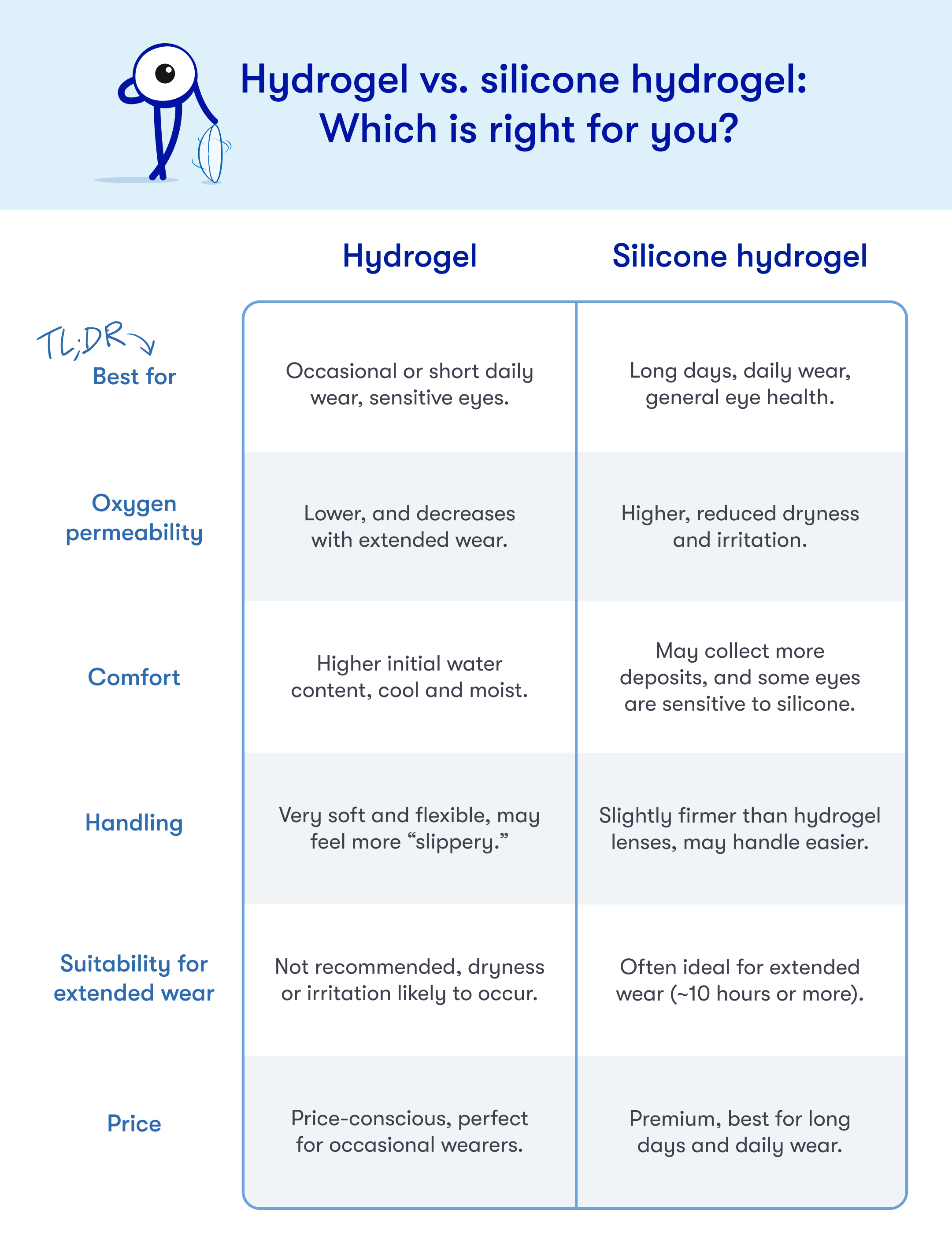
Looking to learn what the difference is between hydrogel and silicone hydrogel lenses? You’ve come to the right place for help. We’ll get into the gritty details below, but simply put, silicone hydrogel allows more oxygen to reach the eye than standard hydrogel contacts. Increased oxygen flow to the eyes can help alleviate several eye and contact-related issues.
What is the difference between hydrogel and silicone hydrogel lenses?
Hydrogel contact lenses are water-based and far more commonly used. These lenses have lower oxygen permeability and use water content to function properly.
Silicone hydrogel lenses were first invented in the early 2000s (along with reality television and purple ketchup). Compared to hydrogel lenses, they’re much more porous and allow more oxygen to flow to the cornea.
Can you guess what silicone hydrogel lenses are made of? You’ll never see this coming, but it’s a combination of silicone and hydrogel. The creative genius that went into naming this lens type is truly inspirational.
If you can get past its painfully literal name, you’ll see that this invention was a revolutionary improvement in the world of contact lenses.
Silicone hydrogel lenses are also slightly firmer, without being too firm. So, they’re soft enough to feel comfortable but slightly more solid than standard hydrogel lenses, which can make handling them easier.
Still, it’s not all sunshine and rainbows. One criticism of silicone hydrogel contact lenses is that they collect more debris and protein deposits from your tears.
And of course, nothing good is ever cheap. You pay a premium for luxury cars, the finest restaurants, and business-class flights. Well, you can also pay a luxury price for your eye care. Silicone hydrogel lenses are typically more expensive than their hydrogel counterpart.
Which is better: hydrogel or silicone hydrogel?
When it comes to deciding what’s better, hydrogel vs. silicone hydrogel lenses, it ultimately depends on what features are most important to you.
For example, if you’re asking, “Is silicone hydrogel better than hydrogel for dry eyes?” the answer is yes. Silicone hydrogel improves oxygen flow in the eye, helping reduce dryness and irritation.
Additionally, silicone hydrogel helps reduce complications and problems associated with low oxygen, such as corneal inflammation. If you’re prone to these eye issues, the silicone option is optimal.
What are the disadvantages of silicone hydrogel lenses?
Are silicone lenses better? They certainly come with many benefits, but it can be just as important to know where they fall short. After all, if they were a perfect product, you wouldn’t need to be doing this fascinating contact lens research right now! (But, we’re so happy you’re here!)
Some of the drawbacks of silicone hydrogel lenses are:
-
Less comfortable for delicate eyes
-
Collect more deposits, which can increase the risk of discomfort
-
Not suitable for people with silicone intolerance
What are the cons of hydrogel?
Now, we don’t want you to think we’re biased here. We brought the silicone hydrogel lens criticism, and now, it’s the standard hydrogel lens' turn.
Some of the drawbacks of hydrogel lenses are:
-
Lower oxygen permeability, which can potentially increase discomfort
-
They’re less suitable for extended wear. The longer you wear hydrogel lenses, the more water evaporates from them, leaving you with a drier lens that can become uncomfortable.
-
They’re less suitable for challenging environments, such as extreme heat, where the lens dries out quickly.
Order Contact Lenses Online
Learn how to order contact lenses online at 1-800 Contacts
Order contacts
Hydrogel vs. silicone hydrogel contact lenses: Which is right for you?
If you’re still unsure about the silicone hydrogel vs. hydrogel contacts debate, we don’t blame you. Part of the reason that it can be hard to determine which is right is that there is no “perfect” or “best” contact lens on the market. Contacts are a very personal, unique choice, and your best isn’t necessarily someone else’s best. And when you find the right fit, you’ll just know because it’ll feel like love at first sight. (See what we did there?)
Generally speaking, here’s how you can decide between the two options:
Choose hydrogel lenses if you:
-
Consider yourself to have “delicate” or “sensitive” eyes
-
Are price-conscious
These Proclear 1-Day lenses are our current recommendation for a high-quality hydrogel option.
Choose silicone hydrogel lenses if you:
-
Tend to wear contacts for extended periods of time (such as 10 hours or more)
-
Previously had eye issues caused by low oxygen, like corneal inflammation
Check out some of our top recommendations for silicone hydrogel contact lens options from ACUVUE OASYS and Biofinity.
Or let the professionals who went to school for this sort of thing decide. Book an appointment with an eye care professional and ask for their recommendation.
At the end of the day, both types of contact lenses are comfortable and excellent choices for most people. When you decide which is right for you, you can place an order with 1-800 Contacts in just three easy steps.