


Dry eye syndrome: symptoms, causes, treatment, and whether it can be cured
Have you ever felt like there's something stuck in your eye, only to look in the mirror and find nothing there? Or maybe your eyes burn, sting, or feel tired by the end of the day, especially after spending hours on a computer.
It could be the ghost of an eyelash (okay we might be kidding, there), but those symptoms may be more than occasional irritation. They could be signs of dry eye syndrome.
Dry eye syndrome is one of the most common eye conditions, affecting millions of people. While it can range from mildly annoying to genuinely disruptive, understanding what's causing your symptoms is often the first step toward relief.
Here's how to recognize dry eye syndrome, what causes it, and what realistic treatment options look like.
What is dry eye syndrome?
Dry eye syndrome is a chronic condition that occurs when your eyes don't produce enough tears or when your tears evaporate too quickly.
Tears are most famous for their award-winning role in crying, but they do a lot of other important work too. They help:
-
Keep the surface of the eye smooth
-
Wash away debris
-
Protect against infection
-
Support clear vision
Dryness and irritation happen when your tear system stops functioning properly. And when these symptoms become chronic and interfere with daily life, that’s when plain old dry eyes can become a full-blown syndrome.
Common dry eye condition symptoms
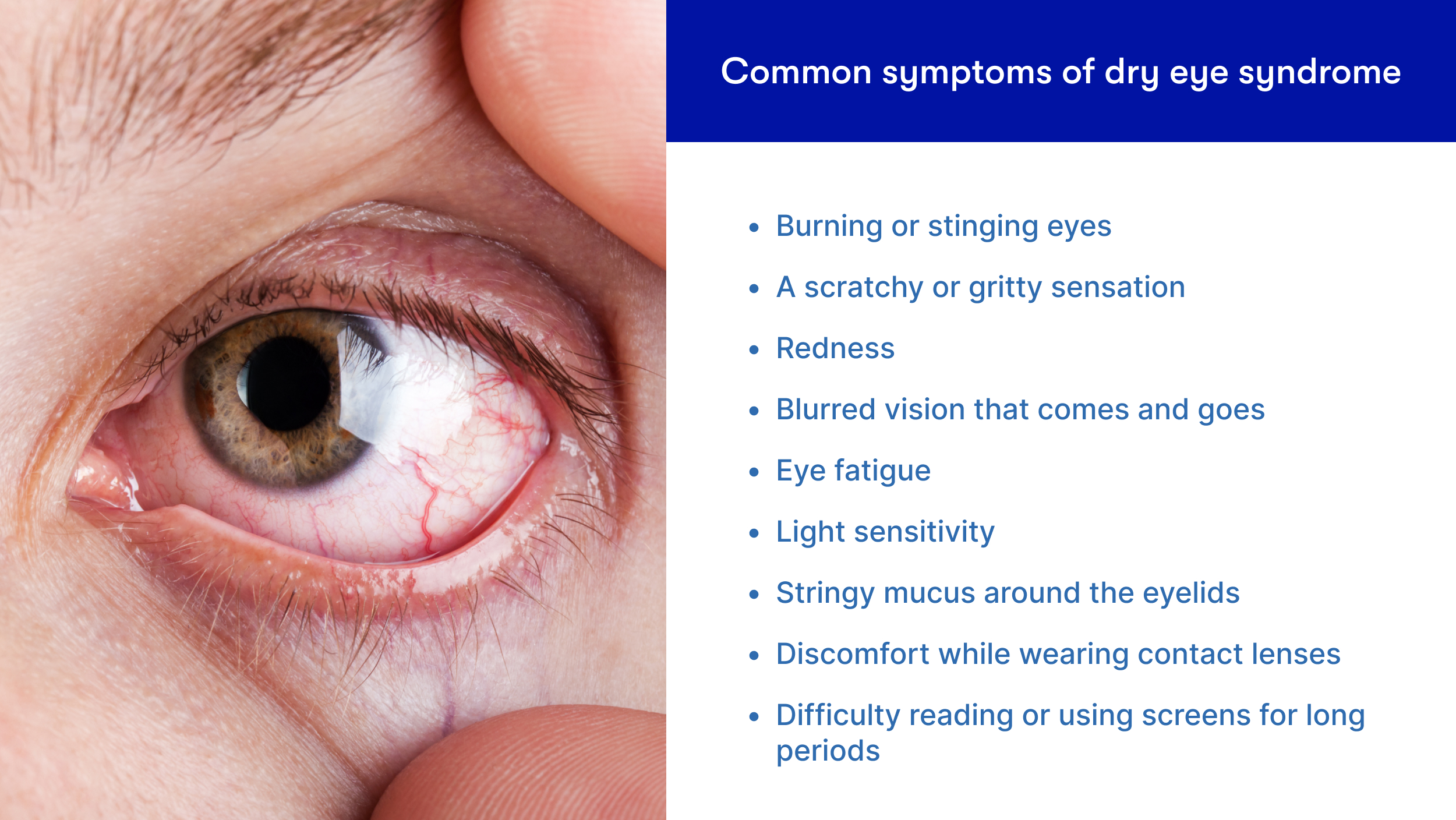
Many people expect dry eye syndrome to simply feel dry. In reality, symptoms can vary quite a bit. Common symptoms include:
-
Burning or stinging eyes
-
A scratchy or gritty sensation
-
Redness
-
Blurred vision that comes and goes
-
Eye fatigue
-
Light sensitivity
-
Stringy mucus around the eyelids
-
Discomfort while wearing contact lenses
-
Difficulty reading or using screens for long periods
-
Perhaps surprisingly, watery eyes
When the surface of the eye becomes irritated, the body may produce excess reflex tears. Unfortunately, these tears don't usually solve the underlying problem, so your eyes may feel watery and dry at the same time.
Dry eyes vs. dry eye syndrome: what's the difference?
Almost everyone experiences dry eyes occasionally. Spending all day looking at screens, sleeping poorly, and spending lots of time in a dry environment like an airplane can all cause temporary dry eyes. Your eyes usually feel better once the trigger goes away.
Dry eye syndrome is different because symptoms tend to stick around like that relative who keeps liking all your posts on Instagram. If your symptoms occur repeatedly, last for weeks or months, get in the way of daily activities, or return even after short-term relief, it might be dry eye syndrome.
A simple way to think about it:
Occasional dry eyes
-
Happen occasionally
-
Usually tied to a specific trigger
-
Improve fairly quickly
Dry eye syndrome
-
Happens frequently
-
May affect work, driving, reading, or contact lens wear
-
Often requires ongoing management
What causes dry eyes?
Chances are good that one of two common issues is causing your dry eye: not enough tear production or tears that evaporate too quickly. While the mechanisms are different, both can lead to chronic dry eye.
Not enough tear production
Some people simply don't produce enough tears to adequately lubricate the eye, often called aqueous-deficient dry eye.
Aqueous-deficient dry eye is associated with aging, hormonal changes, previous eye surgery, autoimmune conditions, and even as a side effect of certain medications. (Looking at you, daily allergy meds.)
Without enough tears, the surface of your eyes are vulnerable to dryness and can get irritated more easily.
Tears evaporate too quickly
In many cases, people make enough tears, but those tears don't stick around long enough to do their job. This is called evaporative dry eye, and it’s the most common form of dry eye.
Wondering how to stop that excess evaporation? It all comes down to your eyes’ tear film, a triple layer system of different types of tears that keep your eyes happy and moist. The outer layer’s purpose is to hold in moisture essential for the other two layers.
Evaporative dry eye happens when the tear film’s outer layer falls behind on the job. Common causes are excess screen time, reduced blinking, eyelid inflammation, contact lens wear, or an issue with your eyes’ meibomian glands.
Meibomian gland dysfunction (MGD) occurs when the tiny glands that produce your outer layer of tears become blocked or stop functioning properly. An eye doctor can determine if MGD is the cause of your dry eye syndrome.
Warm compresses and eyelid hygiene routines are common at-home treatments for MGD. Specialized in-office treatments may also help if your meibomian glands are causing your dry eye.
Common dry eye risk factors
Several things can increase your likelihood of developing dry eye syndrome. Risk factors for dry eye syndrome include:
-
Being over age 50
-
Extended computer use
-
Wearing contact lenses
-
Certain medications
-
Hormonal changes
-
Autoimmune diseases
-
Smoking
-
Air conditioning or dry climates
-
Long periods of reading or close-up work
Most people with dry eyes have more than one contributing factor.
When to schedule an eye exam for dry eyes
So, if exorcising that ghost eyelash doesn’t pan out, it might be time to call your eye doctor. Schedule an eye exam for your dry eyes if:
-
Symptoms persist for several weeks
-
Artificial tears aren't helping
-
Your eyes are frequently red
-
Contact lenses have become uncomfortable
-
Your vision is becoming blurry
-
Symptoms interfere with work or daily life
Seek prompt medical attention if you experience:
-
Severe eye pain
-
Significant vision changes
-
Sudden light sensitivity
-
Symptoms affecting only one eye
How dry eye syndrome is diagnosed
Dry eye may seem straightforward, but different people can have similar symptoms for very different reasons. A diagnosis pinpoints the cause of your dry eye to then narrow down the right treatment for your specific case.
Dry eye syndrome is diagnosed through a comprehensive eye exam. Your eye doctor will look under the lid to check your tear production, eyelid health, meibomian gland function, and eye surface. They’ll also review your symptoms, medical history, and medications to determine the best course of action.
One diagnosis, multiple causes
The exact same dry eye symptoms may need very different treatments. That’s because not every case of dry eye syndrome has the same root cause.
For example, Moe's primary issue may be tear deficiency, while Larry's symptoms may be caused by meibomian gland dysfunction. Meanwhile, Curly’s problem is inflammation from too many eye pokes.
Treatment for dry eye syndrome starts with understanding the source of the problem rather than immediately reaching for the same eye drops everyone else uses. That’s why getting a diagnosis from an eye doctor is often the first step to real relief.
First-line treatments for mild dry eye
Many people find relief through simple daily habits and at-home care.
Try artificial tears
Lubricating eye drops are often the first line of treatment. If you're using drops frequently, your doctor may recommend preservative-free formulations.
If you wear contact lenses, always check the label to make sure your eye drops are safe for use with contacts.
Take screen breaks
Screens reduce your blink rate, and unfortunately a sticky note attached to your monitor that says “blink” just hasn’t really panned out. That’s where the 20-20-20 rule comes in.
Every 20 minutes, look 20 feet away for 20 seconds. This encourages blinking and gives your eyes a chance to recover from your latest staring contest with your computer.
Stay hydrated
Adequate hydration supports healthy tear production and overall eye comfort. If you have trouble remembering to drink water, try keeping a glass on your desk while you work or taking a gulp every time you do the 20-20-20 rule.
Use a humidifier
Adding moisture to dry indoor air can help reduce evaporation, especially during winter months.
Adjust contact lens wear
If you notice your dry eye only shows up when you wear contacts, adjusting your contacts brand or habits can help.
Reducing wear time is an easy test you can try at home. If taking out your contacts earlier doesn’t help, you may benefit from trying a different contact lens material or switching to a daily disposable lens.
Check out our fast and easy ExpressExam to see what other contact lens options may work for your unique, special eyes.
Medical treatments for moderate or severe dry eye
If lifestyle changes and artificial tears aren't enough, additional treatments may help.
Depending on the cause, your doctor may recommend:
-
Prescription anti-inflammatory eye drops
-
Tear-stimulating medications
-
Punctal plugs that help retain tears
-
Treatments for meibomian gland dysfunction
-
Specialized dry eye procedures
Many people benefit from a combination approach rather than a single treatment.
Can dry eyes be cured permanently?
For many people, dry eye syndrome is a chronic condition similar to allergies or high blood pressure. The goal is long-term control rather than a one-time cure.
Some people experience significant improvement when a specific cause is identified and treated. Others may need ongoing management, especially if symptoms are related to aging, medication side effects, medical conditions, or chronic inflammation.
The encouraging news is that many people achieve excellent symptom control with the right treatment plan.
Can vitamins or diet help dry eyes?
Diet alone is rarely a complete solution for chronic dry eye syndrome, but some studies suggest that omega-3 fatty acids may support tear function for certain individuals. A balanced diet rich in fatty fish, nuts and seeds, fruits, and vegetables can support overall eye health.
The bottom line
Dry eye syndrome is more than occasional dryness. It's a pattern of symptoms, causes, and tear film dysfunction that often requires a targeted approach.
Some people aren't making enough tears. Others have tears that evaporate too quickly. Understanding which type of dry eye you're dealing with helps guide treatment and improve long-term comfort.
If symptoms are becoming frequent, bothersome, or difficult to manage, an eye exam can help determine whether simple lifestyle changes are enough or whether a more comprehensive treatment plan is needed.
Did you know you can order contacts online?
Say goodbye to trips to the eye doctor and hello to convenience! With 1-800 Contacts, you can easily order your contact lenses online and have them delivered straight to your door. Plus, our online vision exam makes it simple to get the prescription you need without leaving home. And the best part? You'll save money on your first order with 1-800 Contacts. It's never been easier to get your contacts!