


How to clean your contact lenses: a beginner-friendly step-by-step guide
Contact lenses only work well when they're clean.
A proper cleaning routine helps remove debris, protein deposits, and other buildup that can make lenses feel uncomfortable or increase the risk of eye infections. The good news is that cleaning contact lenses doesn't have to be complicated. Once you have a routine, it only takes a few minutes each day.
Here's how to clean contacts safely, what shortcuts to avoid, and what to do if your lenses still don't feel right.
Before you touch your lenses: wash and dry your hands
The most important step happens before you ever touch a contact lens.
Wash your hands thoroughly with soap and water, then dry them completely.
A few tips:
-
Avoid lotions before handling contacts
-
Make sure all soap residue is rinsed away
-
Dry your hands with a clean, lint-free towel when possible
-
Don't handle lenses with wet fingertips
Soap residue, oils, lint, and germs can all transfer to your lenses and cause irritation or discomfort.
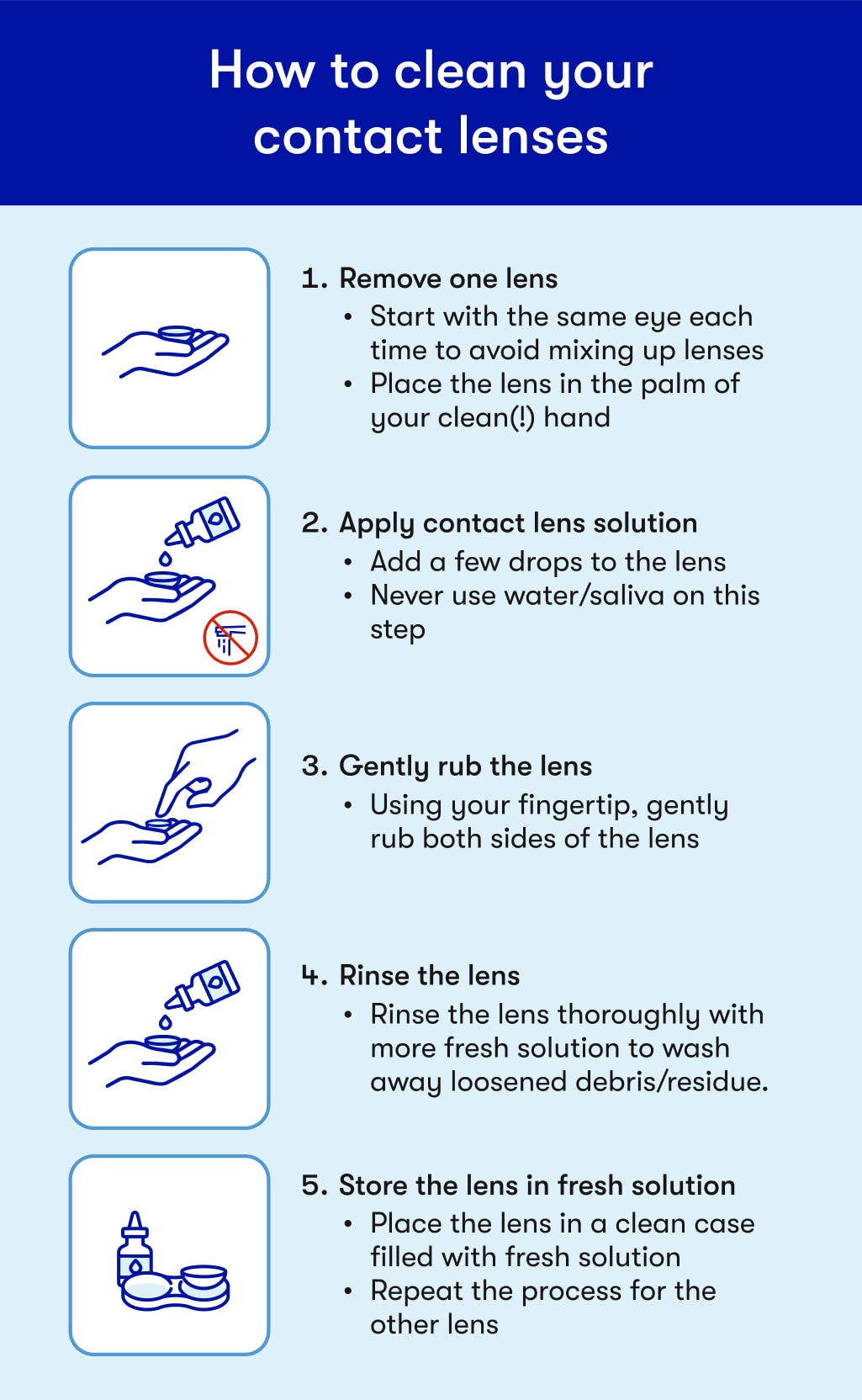
How to clean contact lenses: the everyday routine
If you wear reusable soft contact lenses, follow this routine every time you remove them.
Step 1: Remove one lens
Start with the same eye each time to avoid accidentally mixing up lenses.
Place the lens in the palm of your clean hand.
Step 2: Apply contact lens solution
Add a few drops of fresh contact lens solution to the lens.
Never use water or saliva for this step.
Step 3: Gently rub the lens
Using your clean fingertip, gently rub both sides of the lens.
This helps remove:
-
Protein deposits
-
Oils
-
Dirt
-
Makeup residue
-
Other debris
Even if your solution says "no rub," many eye care professionals still recommend a gentle rub-and-rinse approach for better cleaning.
Step 4: Rinse the lens
Rinse the lens thoroughly using fresh solution.
This washes away loosened debris and cleaning residue.
Step 5: Store the lens in fresh solution
Place the lens in a clean case filled with fresh contact lens solution.
Do not reuse yesterday's solution.
"Topping off" old solution with new solution may seem harmless, but it can increase the risk of contamination.
Then repeat the process for the other lens.
“How To Clean Your Contact Lenses” is the third video in a three part series aimed to help you learn the ins and outs of contact lens wear. Don’t forget to also check out “How To Put In Your Contact Lenses” and “How to Take Out Your Contact Lenses.”
How do you disinfect contacts?
Cleaning and disinfecting aren't exactly the same thing.
Cleaning
Cleaning helps remove:
-
Dirt
-
Debris
-
Protein deposits
-
Oils
Disinfecting
Disinfecting helps reduce bacteria and other harmful microorganisms that can lead to eye infections.
Both steps are important.
Many multipurpose contact lens solutions clean, rinse, disinfect, and store lenses using a single product.
Hydrogen peroxide systems also clean and disinfect lenses but require a special neutralization process before the lenses can be worn.
Multipurpose solution vs. hydrogen peroxide solution
Multipurpose solution
Most contact lens wearers use multipurpose solutions because they're simple and convenient.
These solutions typically:
-
Clean
-
Rinse
-
Disinfect
-
Store lenses
It’s like a 4-in1 shower gel, but actually effective.
Hydrogen peroxide solution
For those with sensitive eyes, hydrogen peroxide systems can be a great option.
However, they must be used exactly as directed. Putting hydrogen peroxide solution directly into your eyes can cause severe burning and irritation.
So, keep the lenses in the special neutralizing case for the full recommended time and always follow the manufacturer's instructions carefully.
How long does it take contact lenses to disinfect?
The answer depends on the solution you're using.
Different products have different required soak times.
Always check the instructions on your contact lens solution and allow the lenses to disinfect for the full recommended time.
Taking lenses out too early may leave them:
-
Less comfortable
-
Less clean
-
Less effectively disinfected
When in doubt, follow the directions that came with your contact lens care system.
What about daily disposable contacts?
Daily disposables are designed for single use only, so they should never be cleaned and reused. Throw them away and open a fresh pair the next time you wear contacts.
What should you never use to clean contacts?
If you run out of contact lens solution, it can be tempting to improvise. Don't.
Never use:
-
Bottled water
-
Saline solution alone
-
Saliva
-
Homemade cleaning mixtures
-
Expired solution
-
Old solution left in your lens case
-
Eye drops as a substitute for disinfecting solution
If proper contact lens supplies aren't available, it's generally safer not to wear the lenses until they can be cleaned and disinfected correctly.
Why tap water and saliva are a bad idea
Water and saliva is never just water and saliva. They introduce microorganisms and contaminants to your lenses which increases the risk of:
-
Eye irritation
-
Corneal infections
-
Serious vision-threatening complications
Contact lenses should only come into contact with products specifically designed for lens care.
Don't forget about your contact lens case
Storing clean lenses in a dirty case is like putting on sweaty gym clothes after an everything shower. Pointless.
How to prepare your case for clean lenses:
Every day
-
Empty old solution
-
Rinse the case according to your lens care system instructions
-
Allow the case to air dry
Don’t forget to replace your contact lens case as recommended, typically every few months.
How to get rid of buildup on contacts
Over time, contact lenses naturally collect:
-
Protein deposits
-
Oils
-
Environmental debris
A consistent rub-and-rinse routine is the best way to reduce buildup.
If deposits keep returning despite proper cleaning, it may mean:
-
The lenses need replacing
-
The replacement schedule isn't being followed
-
A different lens material may be a better fit
-
Your contact lens care system may need adjustment
If the problem persists, an eye care provider can help determine the cause.
Stop wearing contacts immediately if...
Remove your contacts and leave them out if you experience:
-
Persistent eye pain
-
Significant redness
-
Light sensitivity
-
Eye discharge
-
Worsening blurry vision
-
The feeling that something is stuck in your eye
-
Sudden vision changes
If these symptoms persist after you remove your lenses, it may indicate something more serious than dirty lenses. Contact your eye care provider.
Even if you think it’s a small problem, it’s always better to ask before it becomes a larger, more expensive one.
How often should you clean your contacts?
Every time reusable contact lenses come out of your eyes, they should be cleaned, disinfected, and stored properly.
Just as important:
-
Replace lenses on schedule
-
Replace your lens case regularly
-
Keep up with routine eye exams
The bottom line
Cleaning contact lenses comes down to a simple routine:
-
Wash and dry your hands
-
Remove the lens
-
Rub and rinse it with fresh solution
-
Disinfect it for the full recommended time
-
Store it in a clean case with fresh solution
If you're ever tempted to use tap water, saliva, or yesterday's solution, it's safer to wait until proper contact lens care supplies are available. A few extra minutes of care can help keep your eyes comfortable, healthy, and ready for whatever comes next.
Also wondering how to take out or put in your contacts?
Did you know you can order contacts online?
Once you've mastered cleaning your contacts, keeping a fresh supply on hand is the easy part. With 1-800 Contacts, you can order contact lenses online and have them shipped directly to your door. Plus, if you're eligible, our online vision exam may help you renew your prescription without an office visit.
Original published: 6/19/2020
Updated: 9/14/2026