How to make your contacts more comfortable
Making contacts more comfortable usually comes down to a few simple adjustments, such as using rewetting drops and taking frequent breaks. It's certainly easier than launching a rocket or passing a chemistry test. That said, discomfort is common, especially if you're switching styles or wearing lenses for the first time. Fortunately, you can combat discomfort by learning how to make your contacts more comfortable.
In this guide, you'll learn all about contact comfort. We explain why new contacts feel uncomfortable, what causes discomfort in longtime wearers, and how to make contact lenses more comfortable for daily wear.
Why are contacts so uncomfortable?
For some people, contacts are uncomfortable due to dryness, improper fit, or extended wear. You can even experience discomfort simply because you're adjusting to lenses for the first time.
Here's a breakdown of the most common causes of discomfort:
-
Dryness: Too much screen time, low-moisture environments, and certain lens materials can reduce natural eye lubrication, leaving you singing "Dry, Dry, Dry" (insert NSYNC lyrics here).
-
Debris under the lens: Dust, cosmetic particles, and allergens can get trapped under your contacts, irritating the eyes.
-
Wearing too long: Exceeding the manufacturer's recommended wear time can reduce oxygen flow to the eye, increasing discomfort.
-
Inside out: An inside-out lens sits poorly on the eye, causing irritation immediately.
-
Wrong fit or prescription: Ill-fitting contacts can shift around or create extra pressure in your eye, so it's important to see an eye care professional right away.
-
Adjustment period for new wearers: Your eyes need time to adapt, so it's normal to feel that contact lenses are uncomfortable during the first few days of wear.
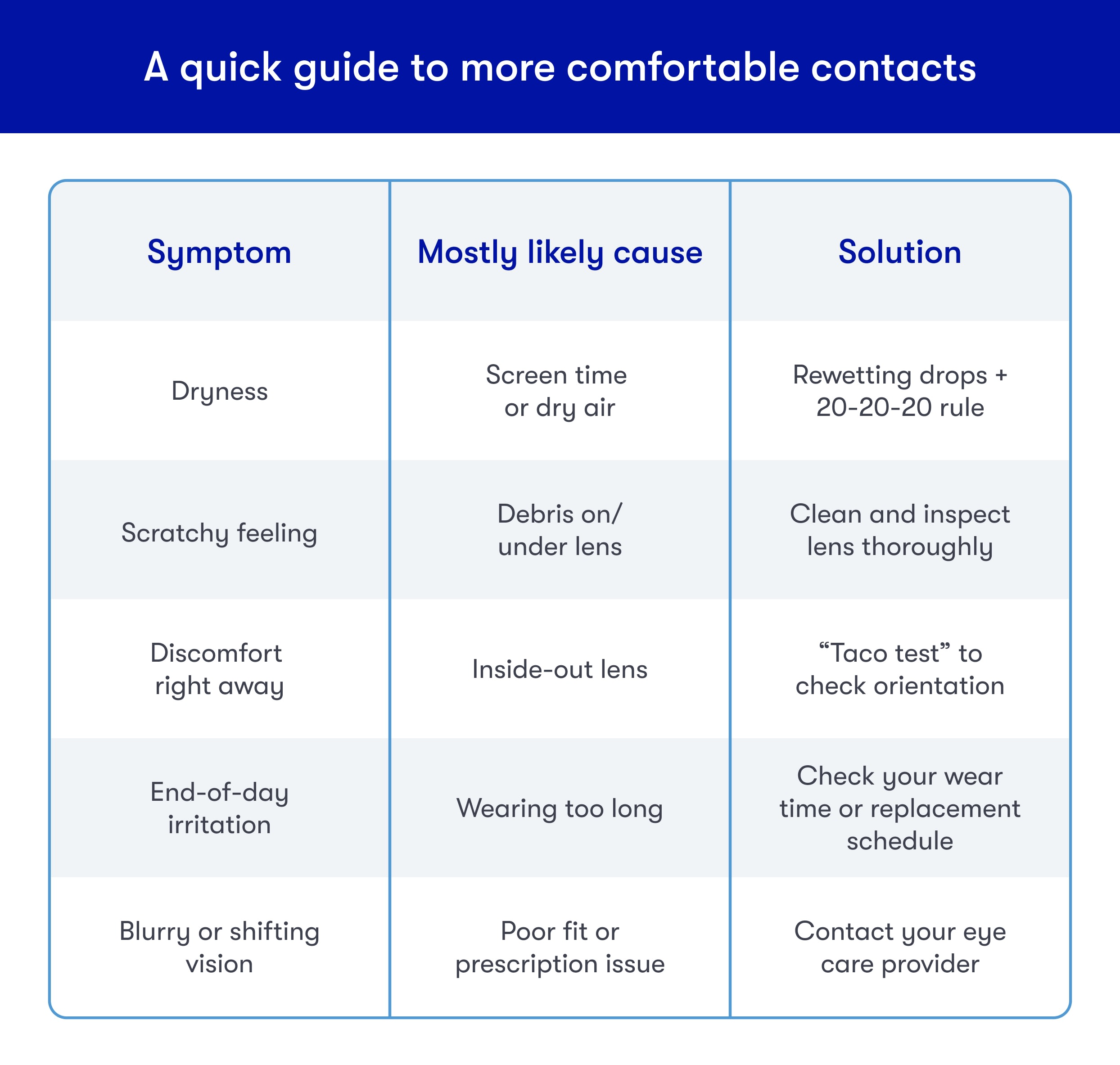
What to do if your contacts are uncomfortable
Are contacts uncomfortable for you? Don't worry. A few simple adjustments can make a significant difference. Here's how to overcome discomfort for good.
Use rewetting eye drops:
Rewetting drops pull double duty, lubricating both your eyes and your contacts throughout the day. But be careful. Rewetting eye drops aren't the same thing as regular eye drops. Look for drops made specifically for use with contact lenses.
Keep your lenses clean:
Protein and debris can build up on contacts over time, causing irritation. Following the recommended cleaning routine for your lenses can stop discomfort in its tracks.
If your contacts feel uncomfortable, follow these steps to clean them:
-
Wash your hands.
-
Place one lens in your palm.
-
Gently rub for about 15 seconds to remove debris.
-
Rinse with more solution and store in a clean case.
-
Repeat the process with the other lens.
Follow the replacement schedule:
You're not meant to wear the same pair of contacts for years on end. Wearing lenses past their recommended replacement date makes irritation worse. Check the box to determine whether you need to replace them daily, biweekly, or monthly.
Be mindful of your environment:
Your environment has a big impact on contact lens comfort. Dry air, fans, and air conditioning can all dry out your eyes, increasing discomfort. So can extended periods of screen time.
If you've been wondering how to make your contacts more comfortable, start by adding a little moisture to your environment. Humidifiers produce steam or water vapor, so they can help you combat dryness.
We also recommend following the 20-20-20 rule for screen time. Every 20 minutes, take a 20-second break from your screen to look at something 20 feet away.
Check lens orientation:
An inside-out lens feels uncomfortable right away, so it's important to check lens orientation. The taco test is one of the easiest methods. This involves gently pinching a contact with your forefinger and thumb. If it folds like a taco, you're good (but now you're hungry).
Are contacts uncomfortable at first?
It's perfectly normal to experience a little discomfort during your first few days of wearing contacts. Most new wearers adjust within 1 week.
Many people also experience:
-
Light sensitivity
-
Occasional eye watering
-
Mild awareness of the lens
These issues usually resolve on their own. One way to minimize discomfort is to give your eyes time to adjust. Instead of jumping feetfirst into all-day wear, build up wear time gradually. For example, you might want to wear your contacts for 2 hours and then use your glasses for the rest of the day.
If discomfort lasts longer than 1 week or it's accompanied by pain, redness, or blurred vision, see your eye care professional.
Why are astigmatism contacts so uncomfortable?
Contacts for astigmatism, also known as toric lenses, can feel less comfortable at first due to their design. They're weighted to stay in a specific position, which helps correct an abnormal curvature of the eye (that's what astigmatism is). This design feels different from standard soft contact lenses.
Fit is especially important with toric lenses. If you have astigmatism, have a conversation with your eye care professional about brands and base curve. The good news is that many wearers find comfort once they find a lens that works with the natural shape of their eyes.
When to talk to your eye doctor
In many cases, you can resolve contact lens problems with a few simple adjustments, but some symptoms are a warning sign that you need to talk to an eye care professional.
Here's when to schedule an appointment:
-
The discomfort lasts for more than 1 week or turns into persistent pain.
-
You notice significant redness, swelling, or discharge.
-
Sensitivity to light persists after the initial adjustment period.
-
You have blurry vision that doesn't improve after removing your lenses.
-
Discomfort returns consistently when you wear a specific pair of lenses.
Removing your contacts and resting your eyes is always the best first step when discomfort occurs.
When you see your eye care professional, ask these questions:
-
How should contacts fit?
-
Should I try a different brand?
-
Am I inserting my contacts correctly?
Other lens options to consider
If you've tried the tips above without any improvement in your discomfort, the lenses themselves might be the problem. Not all lenses are made the same way, so switching brands or styles can make a big difference.
Daily disposables are often recommended for comfort, as there's no need to worry about protein or debris buildup. Silicone hydrogel lenses allow more oxygen to reach the eye, so they're better for longer wear and drier eyes.
Moisture content also matters. High water content doesn't always increase comfort. In fact, some high-water lenses draw moisture from the eye instead of replenishing it. Talk with your eye care professional to determine which material is right for you.
Switching brands within the same prescription type is also an option worth exploring. Once you get a prescription, visit 1-800 Contacts to find your new brand.
Did you know you can order contacts online?
Say goodbye to trips to the eye doctor and hello to convenience! With 1-800 Contacts, you can easily order your contact lenses online and have them delivered straight to your door. Plus, our online vision exam makes it simple to get the prescription you need without leaving home. And the best part? You’ll save money on your first order with 1-800 Contacts. It’s never been easier to get your contacts!