


What causes blurry vision?
Blurry vision is one of the most common eye complaints, and also one of the most varied. It can mean an outdated glasses prescription, a dry contact lens, a blood sugar spike, or something that needs same-day medical attention. The symptom is the same. The cause and urgency are not.
The fastest way to make sense of it: notice the pattern before you do anything else.
Start by noticing the pattern of your blurry vision
Before jumping to causes, a few quick questions help narrow things down significantly.
Did it start suddenly or gradually?
Gradual blurriness that’s been building over weeks or months usually points to refractive errors, age-related changes, or eye strain. Sudden blurry vision, especially in one eye, deserves faster attention even if it doesn’t feel dramatic.
Is it one eye or both?
One eye blurriness often points to something affecting that eye directly: a contact lens issue, dry eye, a corneal problem, or in more serious cases, a retinal issue. Both eyes blurring at once is more consistent with refractive errors, fatigue, blood pressure changes, or systemic causes.
When does it happen?
Blurry vision right after waking often comes from dry eyes or eye surface irritation from sleeping in contacts. Blurriness that builds through the day may be eye strain or focusing fatigue. Blurriness that comes and goes can still matter, especially if episodes are getting more frequent.
Are there other symptoms?
This is where the picture changes fast. Other symptoms help determine how urgent the situation is:
- Redness and discharge point toward irritation, allergies, or pink eye
- Halos around lights, eye pain, and nausea can be warning signs for pressure-related conditions
- Flashes of light, new floaters, or a shadow/curtain across your vision raise concern for retinal problems
- Sudden blurry vision with double vision, severe headache, numbness, or trouble speaking is a medical emergency, not an eye appointment
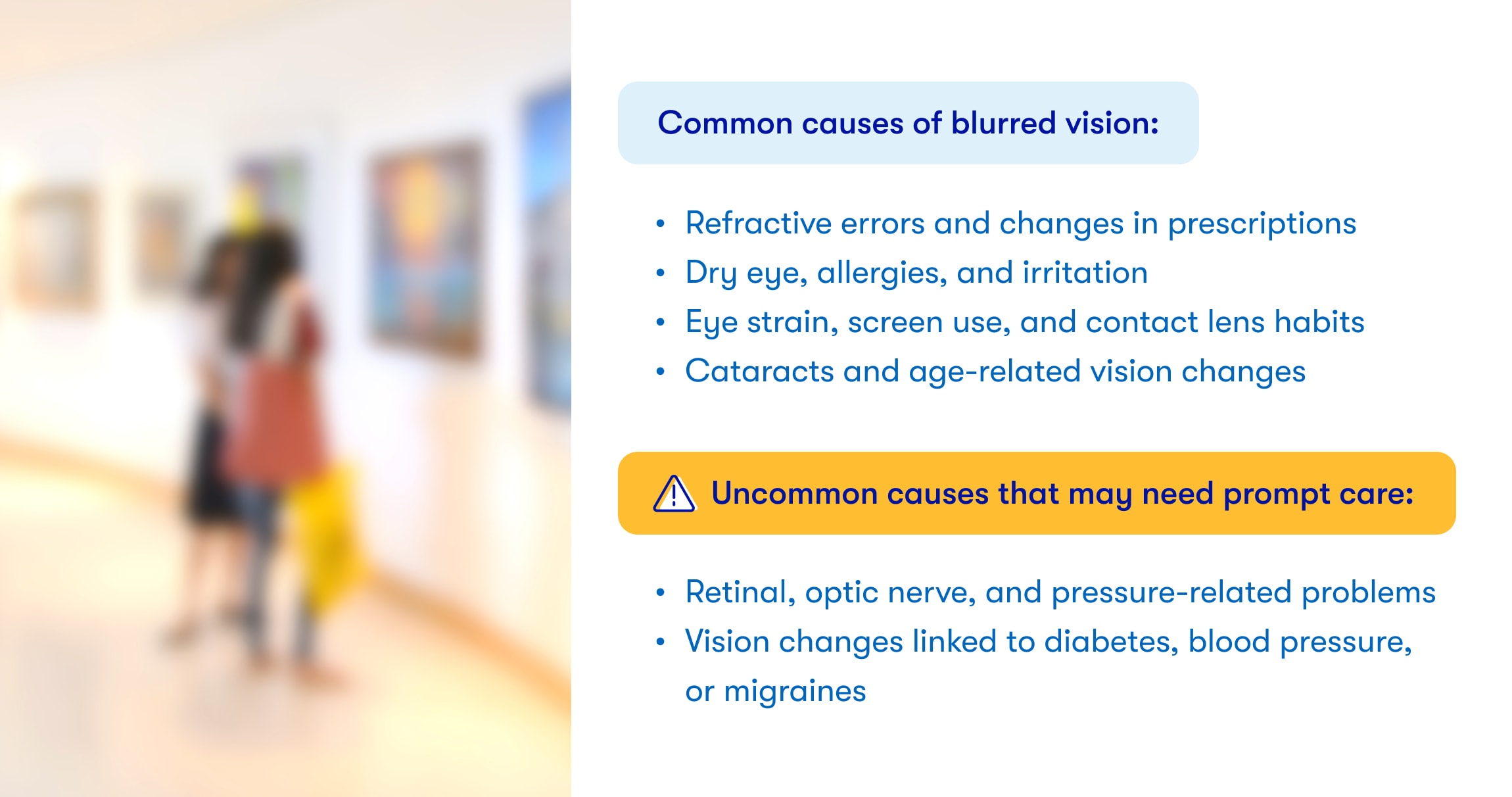
Common causes of blurry vision that are often not urgent
Refractive errors and changing prescriptions
The most common reason people experience blurry vision is a refractive error: nearsightedness, farsightedness, astigmatism, or presbyopia. These all affect how your eye focuses light onto the retina, and they’re corrected with glasses or contact lenses.
If you already wear correction and your vision is still blurry, a few things to check:
- Your glasses lenses may be scratched or dirty
- Your contact lenses may be inside out, torn, or worn past their replacement schedule
- The blurriness may be coming from something other than a refractive error
An updated eye exam is the straightforward fix for prescription-related blurriness.
Dry eye, allergies, and irritation
Dry eyes are a surprisingly common cause of fluctuating or fuzzy vision. When the tear film breaks up unevenly across the cornea, vision can go slightly blurry and then clear briefly after blinking. It’s most noticeable after long stretches of screen time, in dry or windy environments, or toward the end of the day.
Allergies cause similar symptoms: itching, redness, watery eyes, and a hazy or fluctuating quality to vision. Smoke, chlorine, and other environmental irritants do the same.
Over-the-counter lubricating eye drops help manage dry eye symptoms, and antihistamine drops can address allergy-related blurriness. But if symptoms are persistent, an eye doctor visit is more useful than cycling through drop options.
Eye strain, screen use, and contact lens habits
Long hours on screens reduce blink rate and put sustained demand on your focusing muscles. The result is a tired, slightly blurry quality to vision, especially at distance after extended near work. It’s one of the most common complaints from people who work at computers all day.
Contact lens habits also factor in:
- Overwearing lenses beyond their recommended replacement schedule
- Wearing lenses longer than 10 to 12 hours in a day
- Napping or sleeping in lenses not approved for overnight wear
- Using an old prescription that no longer matches your current vision
Rest breaks, proper lens hygiene, and an updated prescription address most of these situations without much drama.
Cataracts and age-related vision changes
If you’re over 50 and noticing a gradual cloudiness, dimness, increased glare, or difficulty seeing clearly at night, cataracts are worth considering. They develop slowly, so the change can be subtle at first.
Other age-related conditions like macular degeneration can also cause gradual blurriness, particularly in central vision. Neither of these is an emergency today, but both need professional evaluation. Gradual doesn’t mean unimportant.
Causes that may need prompt or urgent care
Some patterns call for same-day evaluation or emergency care. Don’t wait these out:
- Sudden vision loss or dramatic vision change in one or both eyes
- Blurry vision in one eye that appears out of nowhere with no obvious cause
- Eye pain alongside blurry vision
- Halos around lights with nausea or pressure
- Flashes of light, a sudden increase in floaters, or a shadow or curtain across part of your vision
- Double vision that appears suddenly
- Blurry vision combined with severe headache, numbness, confusion, or difficulty speaking
That last combination is a medical emergency. Call 911 or go to an emergency room, not an eye doctor.
Retinal, optic nerve, and pressure-related problems
Retinal detachment, problems affecting the optic nerve, and acute angle-closure glaucoma are all conditions where speed matters. They can involve sudden blurry vision, partial loss of vision, pain, or dramatic visual changes.
Retinal detachment often presents with flashes of light, a sudden surge of floaters, and a shadow or curtain spreading across your visual field. Acute glaucoma often involves severe eye pain, halos, nausea, and sudden vision change. Both require same-day emergency care.
Blurry vision linked to diabetes, blood pressure, or migraine
High blood sugar, blood sugar swings in diabetes, and elevated blood pressure can all affect the blood vessels in the retina and cause temporary or more serious blurriness. Diabetic retinopathy is a leading cause of vision loss that develops gradually with poorly managed diabetes.
High blood pressure can cause blurry vision, headaches, and in severe cases, changes to the optic nerve or retina. If you have hypertension and suddenly experience vision changes, treat it as urgent.
Migraine with aura can cause temporary visual disturbances including blurry vision, zigzag lines, or blind spots. These usually resolve within an hour. But if visual symptoms appear without a typical migraine headache, or are happening for the first time, get evaluated rather than assuming it’s a migraine.
What could cause one eye to suddenly become blurry?
On the milder end: dry eye concentrated in one eye, a smudged or inside-out contact lens, or a foreign body. These are easy to rule out quickly.
On the more serious end: corneal problems, retinal issues like detachment or a vascular event affecting one eye, or reduced blood flow to the optic nerve. Sudden one-eye blurriness is difficult to sort safely at home. If removing your lens and resting your eyes doesn’t resolve it within a short time, get it evaluated the same day.
What to do next
A quick check before you call anyone
For mild, gradual, or intermittent blurriness:
- Remove your contact lenses if you’re wearing them and see if vision improves
- Clean your glasses lenses if you wear glasses
- Blink a few times and see if the blurriness clears briefly (a sign of dry eye)
- Rest your eyes for 20 minutes away from screens
- Use lubricating eye drops if dryness seems likely
If blurriness clears after one of these steps, you probably have a manageable cause worth following up on at your next eye exam. If it doesn’t clear, worsens, or is accompanied by any of the red flag symptoms above, contact an eye doctor promptly.
Can blurry vision go back to normal?
Yes, in most cases. Blurry vision from dry eyes, eye strain, allergies, or an outdated prescription can improve with the right treatment. The key is whether the cause is temporary and correctable.
Blurry vision that’s been present for a long time, is getting progressively worse, or comes with other symptoms is less likely to resolve on its own and more likely to need professional evaluation.
What about natural remedies and vitamins?
Blurry vision is a symptom, not a single condition, so there’s no one natural fix or missing vitamin that covers most cases. Vitamin A deficiency can affect vision, but actual deficiency is uncommon in people with adequate nutrition. If general eye health and nutrition are your concern, that’s a reasonable conversation with your doctor. It’s separate from investigating sudden or unexplained blurriness, which needs a clinical evaluation.
Frequently asked questions
When should I worry about blurry vision?
If it comes suddenly, affects one eye, comes with eye pain, flashes, floaters, a curtain over your vision, or any neurological symptoms like numbness or confusion, get evaluated promptly. Same-day care is appropriate for sudden or one-eye blurriness with no obvious cause.
How do you get rid of blurry vision?
It depends on the cause. An updated prescription, lubricating eye drops, reduced screen time, and proper lens hygiene address many common causes. Sudden or unexplained blurriness needs a proper diagnosis before treatment makes sense.
Did you know you can order contacts online?
With 1-800 Contacts, you can order your contact lenses in just a few clicks and have them delivered right to your door. Need to renew your prescription? Our online vision exam makes it easy to do from home. New customers save on their first order.
Original publish date: 2/24/2023
Updated date: 11/2/2026